

Houston Rent Prices in 2026: What the Data Actually Shows
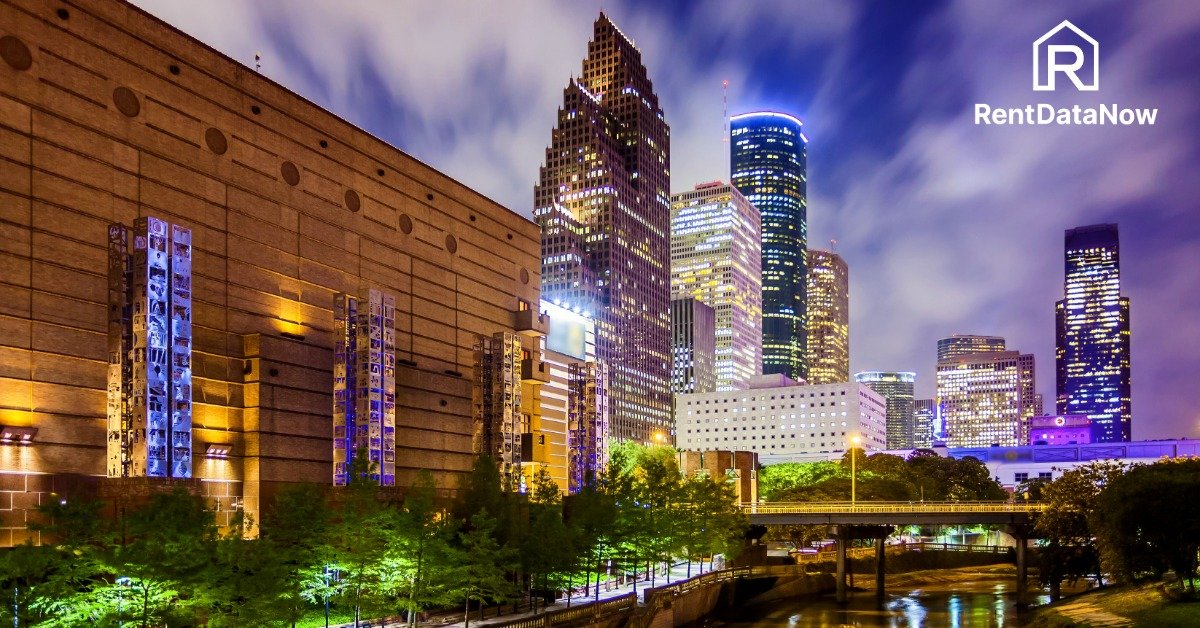
Houston is the cheapest of the four major Texas metros right now, and it is not particularly close. The median rent sits at $1,542 a month according to RentDataNow's March 2026 data, which is 19 percent below the national median of $1,895. With a median household income of $64,813, Houston rents consume about 29 percent of gross income, just under the 30 percent cost-burden threshold and meaningfully better than Dallas, Austin, or any major coastal city.
That affordability is real, but it is concentrated in certain parts of the city. The neighborhood spread in Houston runs from $702 one-bedrooms in Northeast Houston to $3,007 in Southmore. Know where you are looking before you assume the citywide average applies to your search.
The Numbers From RentDataNow
Studios in Houston average $1,264 a month. One-bedrooms average $1,320. Two-bedrooms run $1,577. Three-bedrooms average $2,102. Rents are down 1 percent year over year at the city level, with a modest monthly uptick of 1 percent in the most recent data, which means the market has been softening overall but may be starting to stabilize. Houston builds aggressively and the supply pipeline that has been compressing rents for the past two years is gradually slowing.
The Inner Loop: Where the Premium Is Real
Houston's Inner Loop is the ring of neighborhoods inside Highway 610, and it commands rents well above the city median. Montrose and the Museum District are the most desirable areas for renters who want walkability and nightlife access. Montrose one-bedrooms run around $1,300 on the lower end but climb significantly in newer or renovated buildings. Greenway-Upper Kirby pushes $1,677 for a one-bedroom. The Heights averages $1,844 overall, down slightly from last year, with one-bedrooms around $1,693.
Downtown Houston has actually been one of the better stories for renters this year. Average rent there dropped 5.9 percent over the past year to $2,260, with studios at $1,451 and one-bedrooms at $1,930. That is a meaningful discount from where it was in 2024 and reflects the significant new luxury supply that came online in the urban core. For renters who want Downtown Houston specifically, now is a better entry point than at any time in recent years.
Midtown one-bedrooms typically range from $1,500 to $1,900 in newer buildings. It has a higher concentration of amenity-rich apartments than almost any other Houston submarket and stays consistently competitive. The Washington Avenue and Memorial Park corridor is cheaper than Montrose or Midtown proper, with some one-bedrooms in the $944 range.
Affordable Neighborhoods: Where the Citywide Average Actually Lives
The bulk of Houston's affordable rental stock sits outside the Loop. Northeast Houston, Sunnyside, and Greenspoint have one-bedroom medians under $800, which is genuinely cheap by any major metro standard. These neighborhoods are car-dependent, further from the central employment corridors, and have higher crime rates in certain areas, context that matters when evaluating the price.
Sharpstown and Clear Lake are more practical affordable options. Sharpstown one-bedrooms average $779 and the area has reasonable access to the Gulfton/Westheimer corridor and decent freeway connectivity. Clear Lake at $825 for a one-bedroom sits near NASA's Johnson Space Center and has a different character than the inner-city affordable neighborhoods, with more suburban housing stock and a more stable tenant base.
North Houston averages $1,191 overall, down slightly year over year, with one-bedrooms around $1,138. This is the most accessible affordable submarket for renters who work in the north energy corridor or need access to Bush Intercontinental Airport.
The Suburbs: More Space, Real Tradeoffs
Houston's suburbs offer some of the best value-per-square-foot in any major metro. Katy to the west averages around $1,515 a month with newer apartment stock and good schools. Pearland and League City to the south are similarly priced and popular with Medical Center employees who can tolerate the commute. Sugar Land runs slightly higher with a more established commercial base.
Spring and Humble to the north are cheaper still, typically under $1,300 for a one-bedroom, and are practical choices for renters working in the Woodlands corridor or at the airport. The Woodlands proper runs around $1,640 median, which reflects its premium positioning as the best-planned suburb in the metro. Conroe north of The Woodlands is cheaper and growing fast as renters get priced out of the more established suburbs.
The tradeoff across all of these suburbs is the same: Houston has no commuter rail worth relying on, which means a car is not optional. Factor real commute costs into any suburban rent comparison.
The Affordability Risk Nobody Is Talking About
Houston's headline affordability numbers are accurate but increasingly fragile. The Kinder Institute for Urban Research flagged the city's affordability as "at risk" in early 2026, driven by a combination of rising home insurance costs tied to flood risk, limited housing supply in the most desirable neighborhoods, and income gaps that haven't kept pace with even modest rent growth. Harris County has surpassed 5 million residents and most of the population growth is being absorbed in the suburbs rather than the urban core.
For now, Houston remains the most accessible major Texas city for renters on a budget. One-bedrooms under $1,000 still exist inside city limits, two-bedrooms under $1,300 are available in most suburban submarkets, and the rent-to-income ratio is among the healthiest of any large American city. That combination is genuinely unusual in 2026 and worth taking seriously if Texas is on your list.
Check current Houston rent data by neighborhood and bedroom type at RentDataNow.
Frequently Asked Questions
Is Houston really one of the most affordable major cities in the US right now?
Yes, but the affordability is uneven. At around $1,542 median rent, Houston looks cheap compared to other major metros, but that number hides a wide range depending on where you look. The city average is real, it just doesn’t apply everywhere.
Why does Houston feel affordable compared to cities like Austin or Dallas?
The rent-to-income ratio is healthier. Houston renters spend about 29% of income on rent, which is just under the typical cost-burden threshold. In cities like Austin, that percentage is meaningfully higher, even if the rent difference doesn’t look huge at first glance.
Why is rent so much higher inside the Houston Inner Loop?
That’s where demand concentrates. Walkability, nightlife, and proximity to major employment centers all push rents higher. Neighborhoods like Montrose, Midtown, and The Heights carry a premium because they offer a lifestyle Houston doesn’t replicate well elsewhere.
Related Rent Guides
San Francisco rent hits record $4,682 a month, requiring a $187,280 salary
Typical rent in San Francisco hit $4,682 in August, up 25.1% in a year. At the 30% rule that takes $187,280 a year, which is more…

Military housing allowance covers typical rent near 13 big bases, but a three-bedroom is a stretch
The 2026 Basic Allowance for Housing tops typical rent near every big base we checked. For a junior enlisted family that needs thr…
Heat season has started. Here's how warm your landlord has to keep your apartment
Heat season is underway in much of the country. In New York City, landlords must keep apartments at 68 degrees during the day when…

Jennifer Han is the editor in chief of RentDataNow, covering rent trends, housing costs, and more. She was a real-estate agent before she moved to writing about the market.
Comments (0)
Sign in to join the discussion
No comments yet. Be the first to share your thoughts.