

New York City Rent Prices in 2026: What the Data Shows by Borough and Neighborhood
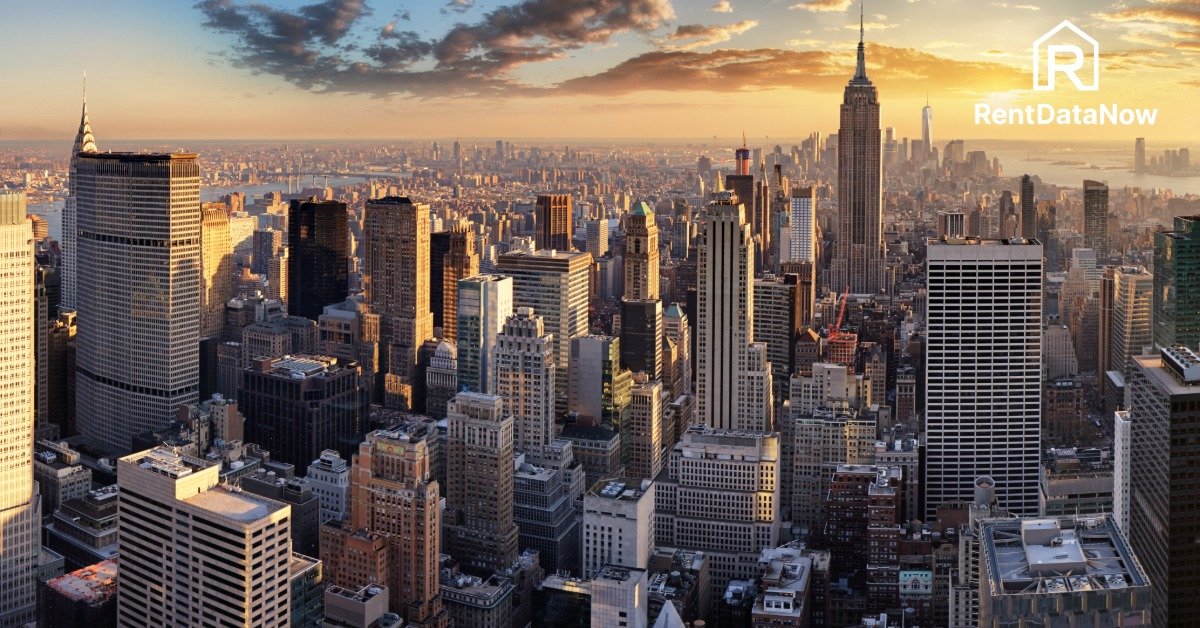
New York City is not one rental market. It is five boroughs, hundreds of neighborhoods, and rent prices that range from $1,500 a month in parts of the Bronx and Queens to $7,450 for a one-bedroom in Hudson Square. The citywide median from RentDataNow sits at $3,706 a month as of March 2026, up 5.4 percent year over year, which makes NYC one of the fastest-rising major rental markets in the country right now. At 55 percent of local median household income going to rent, it is also the most cost-burdened major city in the U.S. by that measure.
Here is what is actually happening by borough and neighborhood.
Manhattan: Up 14.5% Year Over Year
Manhattan average rent hit $5,501 a month in March 2026, up 14.5 percent from a year earlier. That is not a typo. Studios average $4,208. One-bedrooms average $5,379. Two-bedrooms average $7,460. Nearly every rental in Manhattan now falls above $3,000 a month.
The most expensive neighborhoods cluster in Lower Manhattan. Hudson Square has a median one-bedroom at $7,450. Tribeca is $6,900. West Chelsea, Flatiron, SoHo, and NoMad all sit above $5,500. These are not outliers. They represent the market for new leases in prime Manhattan right now.
The relatively affordable end of Manhattan runs through Harlem, Washington Heights, and Inwood. Washington Heights one-bedrooms average around $2,500, which is genuinely cheap by Manhattan standards and roughly comparable to parts of Brooklyn. For renters who need Manhattan technically but have flexibility on the specific neighborhood, the Upper Manhattan corridor offers the most accessible pricing in the borough.
Brooklyn: $4,828 Median, Neighborhood Gaps Are Wide
Brooklyn's median rent sits around $4,828 a month based on current market data, though that figure is heavily influenced by Williamsburg, DUMBO, Greenpoint, and the waterfront neighborhoods that attract luxury development. DUMBO one-bedrooms run $5,282 on the median. Greenpoint is $7,429 for a one-bedroom, which at this point rivals most of Manhattan.
The genuinely affordable parts of Brooklyn are further out. Bushwick one-bedrooms average $1,525, the lowest of any named New York neighborhood according to current listing data. Bay Ridge runs $2,500. Flatlands and Canarsie are in the $1,600 to $1,800 range. These neighborhoods are a full borough away from the Brooklyn waterfront in both geography and price, but they offer real apartments at real prices for renters who do not need to be in North Brooklyn.
Crown Heights, Prospect-Lefferts Gardens, and Flatbush represent the middle tier, with one-bedrooms in the $2,200 to $2,800 range and good subway access on the 2, 3, and 4 lines. These neighborhoods have been absorbing renters priced out of Park Slope and Carroll Gardens for several years and are showing moderate rent growth as a result.
Queens: Best Value for Manhattan Access
Queens is where the rent math starts to make sense for renters who need to commute into Manhattan regularly. Astoria and Long Island City one-bedrooms average $2,800 to $3,000. Jackson Heights, Woodside, and Elmhurst run significantly lower, often $1,800 to $2,200, with express train access to Midtown in 20 to 30 minutes on the E, F, N, W, and 7 lines.
The borough's cheapest neighborhoods are in the far outer areas. Bay Terrace in Queens has the lowest median one-bedroom rent in all of New York City at $1,500 a month. South Richmond Hill and Northeastern Queens are similarly priced. These neighborhoods are close to what suburban living looks like within city limits, and they are genuinely useful options for renters who work remotely or have flexible schedules.
The Bronx: Concessions Are Everywhere
The Bronx has the lowest average rents of any borough at around $2,200 for a one-bedroom, and it also has the most concessions. Roughly 43 percent of Bronx rentals are currently offering some form of concession, primarily from new developments trying to fill units in a market where median incomes are lower than the rest of the city. New construction in the South Bronx in particular has added inventory faster than local demand can absorb it, which is creating a genuine buyer's market for renters in that area.
The tradeoff is commute time. Most of the affordable Bronx neighborhoods require 40 to 60 minutes on the subway to reach Midtown Manhattan. For renters with that flexibility, the Bronx offers the most aggressive discounts and concessions in the entire metro right now.
Staten Island: Suburban Rents, Real Commute
Staten Island one-bedrooms average around $1,900. It is the most affordable borough for market-rate apartments, but the commute to Manhattan requires the ferry and often another transit connection, which adds up to an hour each way for most destinations. For renters who work on Staten Island or in lower Manhattan near the ferry terminal, it is a legitimate value. For anyone commuting to Midtown, Midtown South, or Brooklyn, the commute math is punishing enough that the rent savings often do not hold up against the time cost.
The Rent Stabilization Reality
About half of all NYC rental units are rent stabilized, which means their rents are capped by annual guidelines set by the Rent Guidelines Board. The board voted on June 25, 2026 to freeze stabilized rents, so leases starting between October 1, 2026 and September 30, 2027 carry a 0 percent increase on both one-year and two-year renewals. Leases that started between October 1, 2025 and September 30, 2026 were capped at 3 percent for one year and 4.5 percent for two. This creates a permanent two-tier market. Stabilized tenants paying 2017 rents are not captured in median asking rent data. Market-rate units dominate the listing platforms, which is why every data source shows higher averages than what many current NYC tenants actually pay.
If you are moving to NYC for the first time, you are entering the market-rate tier. The stabilized stock is not generally available to new renters unless you are taking over an existing stabilized tenancy through legal succession or finding one that has come back to market after a vacancy. That distinction matters enormously for understanding why listed rents look so much higher than what many long-term residents pay.
The Affordability Math Does Not Work for Most People
At 55 percent of median household income going to rent, the average NYC renter by definition cannot meet the 30 percent affordability threshold at median price. To afford median NYC rent by that standard requires an income of roughly $148,000 a year. The median household income is $80,483. That gap does not close unless you have roommates, a stabilized unit, or an above-average income.
In practice, most NYC renters solve this with roommates. A two-bedroom split two ways costs $1,516 per person per month at the RentDataNow median of $3,032 for a two-bedroom. That is actually manageable at median income. A one-bedroom at $2,732 alone is not.
Check current rent data for New York City by neighborhood and ZIP code at RentDataNow.
Frequently Asked Questions
Is New York City really as expensive as people say in 2026?
Yes, and the gap between income and rent is the real issue. With a median rent around $3,706 and about 55% of median income going toward housing, most renters are well beyond the traditional affordability threshold. The sticker price is high, but the income mismatch is what makes it feel extreme.
Why do NYC rent averages feel misleading?
Because they mostly reflect market-rate listings, not what long-term tenants actually pay. Rent-stabilized units, which make up a large share of the housing stock, don’t show up in listing data the same way. So the numbers you see online skew toward newer, more expensive units.
Where are the cheapest places to rent in NYC?
The outer parts of Queens and the Bronx are the most affordable, with some one-bedrooms around $1,500 to $2,200. The tradeoff is commute time and, in some cases, fewer amenities. Staten Island is also relatively cheap, but the commute limits who it works for.
Related Rent Guides
Fort Worth rent prices in 2026: typical rent now edges past Dallas
Fort Worth's typical rent of $1,615 now runs a little above Dallas's, though both sit well under the national typical. Here's rent…
Florida property manager gets probation and no jail time after admitting she took tenants' $89,000 rent payments
A former property manager who pleaded guilty to diverting tenants' rent at two Riviera Beach complexes got probation, after more t…
How to fight a security deposit deduction and actually get it back
A questionable deposit deduction isn't the end of it. The process to challenge one is short, cheap, and tilted more toward tenants…

Henry Jo is a housing analyst covering rent data, affordability, city comparisons, and much more. He started following rental data while apartment hunting in two cities at once, and he lives in the Pacific Northwest.
Comments (0)
Sign in to join the discussion
No comments yet. Be the first to share your thoughts.