

Driving farther out no longer makes rent cheaper, suburbs are getting expensive
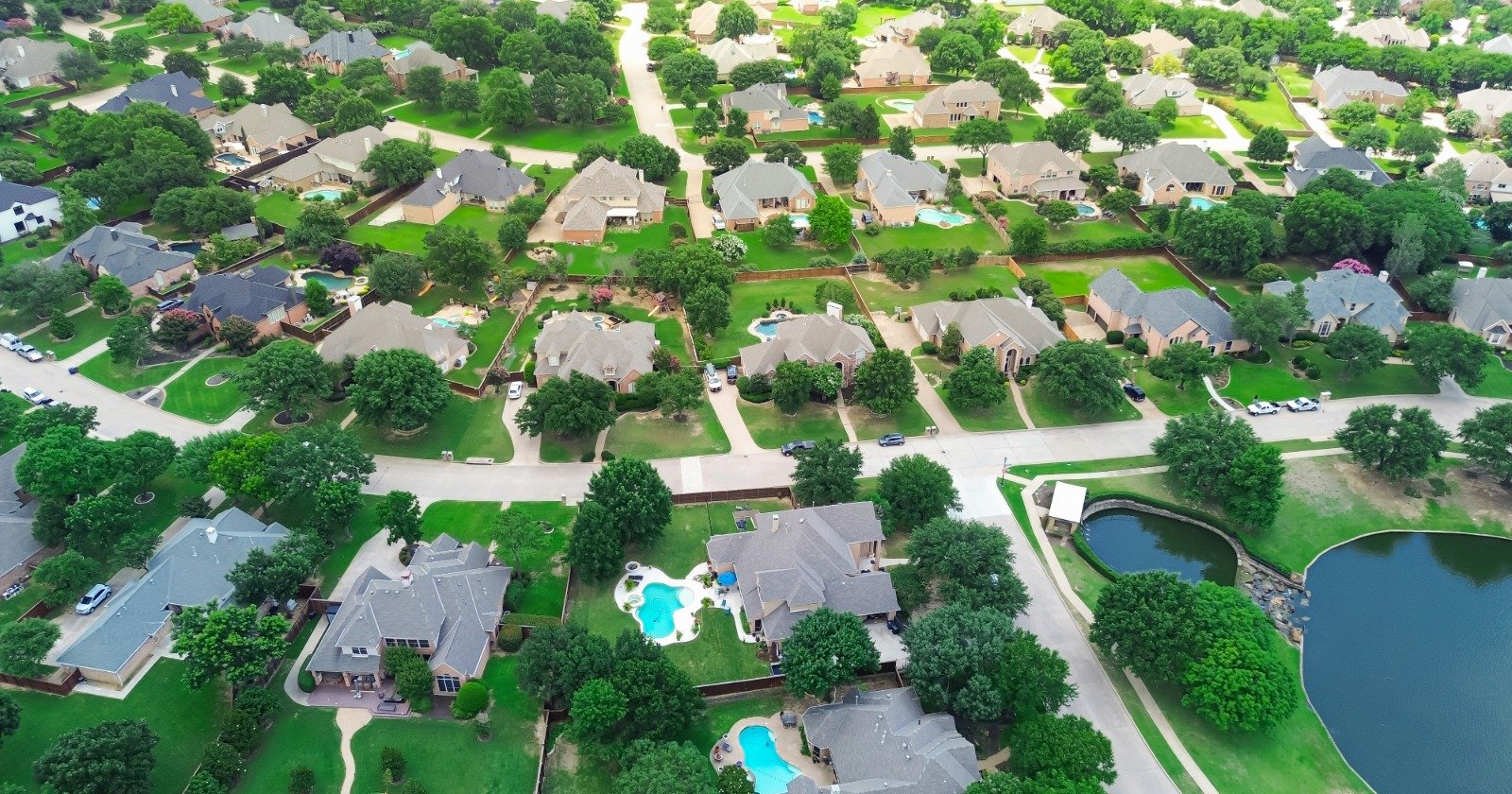
For decades the standard advice to priced-out renters was to have a longer commute by living in the suburbs and save on rent. Move farther from downtown, pay less, accept the commute. We tested that against our ZIP-level rent data in six metro areas, and the rule mostly doesn't hold up anymore.
In Phoenix, moving from the urban core out to the 30-to-40-mile ring actually raises the typical rent by $532 a month.
What the distance curve actually looks like
We took every ZIP code within 40 miles of each downtown, grouped them into distance bands and took the median rent in each band. If the old rule worked, every row below would step down as you move out, and most of them don't.
Metro | 0-5 mi | 5-10 mi | 10-15 mi | 15-20 mi | 20-30 mi | 30-40 mi |
|---|---|---|---|---|---|---|
$1,965 | $1,784 | $1,771 | $1,836 | $2,033 | $2,038 | |
$2,567 | $1,739 | $1,864 | $1,920 | $2,088 | $2,133 | |
$1,724 | $1,644 | $1,605 | $1,669 | $1,757 | $1,760 | |
Phoenix | $1,535 | $1,555 | $1,692 | $1,796 | $2,056 | $2,067 |
$2,012 | $1,811 | $2,119 | $2,249 | $2,470 | $1,932 | |
$2,259 | $2,388 | $2,246 | $2,325 | $2,040 | $2,412 |
The pattern that shows up in four of the six is a U shape. Rent dips somewhere between 5 and 15 miles out, then climbs back up. In Atlanta the cheapest band is 10 to 15 miles at $1,771, and the 30-to-40-mile ring costs $2,038, which is $73 more than downtown and $267 more than the sweet spot.
Chicago is the one metro where the old rule half works, and only at the first step. Leaving the 0-to-5-mile core saves $828 a month, an enormous drop. After that it reverses, and every band farther out costs more than the last.
Phoenix inverts the rule completely. Rent rises at every single step from the core to the edge, so the farther you drive, the more you pay.
Why the edge got expensive
Two things changed here, and neither is about commuting. The far ring filled up with newer construction, and a lot of what's for rent out there is a single-family house rather than an apartment, which means more bedrooms and a bigger number on the lease. The cheap middle ring is older apartment stock built decades ago, and older buildings rent for less almost everywhere.
We're comparing all rentals in each band, so part of the outer-ring premium is a size effect rather than a location effect. Renting a three-bedroom house 35 miles out isn't the same product as a one-bedroom apartment downtown. What the numbers do rule out is the assumption that distance alone buys you a discount, because it clearly doesn't.
What we found is that the savings are close in, not far out. If you're hunting for cheaper rent around Atlanta or Dallas, the band worth searching is roughly 5 to 15 miles from the city center, where you get lower rent without adding an hour of driving each day. Past that you're paying for gas and paying more rent. Although some people deliberately want the northern suburbs of Atlanta or Dallas for the good schools and good family quality of life.
Commuting costs money too, and the further-out options need to clear that bar before they make sense. You can compare specific areas in our city versus suburbs breakdown, or look up any ZIP directly with our ZIP code rent guide.
Sources
RentDataNow ZIP-level rent data for all ZIP codes within 40 miles of each downtown, anchored to the Zillow Observed Rent Index, June 2026
Distance calculated as straight-line miles from each metro's downtown coordinates to the ZIP code centroid
Frequently Asked Questions
Is rent cheaper farther from the city?
Usually not past about 10 miles. In our analysis of six metros, rent typically bottoms out 5 to 15 miles from downtown and then rises again. In Phoenix it climbs at every step, so the 30-to-40-mile ring costs $532 more than the core.
Where is rent cheapest in a metro area?
Generally the middle ring, roughly 5 to 15 miles from downtown, where older apartment stock sits. Atlanta bottoms out at $1,771 in the 10-to-15-mile band and Dallas at $1,605 in the same band.
Why do far suburbs cost more to rent?
Mostly newer construction and a different product. Rentals on the metro edge are more often single-family houses with more bedrooms, while the cheaper middle ring is older apartment buildings. Part of the gap is unit size rather than location.
Related Rent Guides

Houston rental affordability in 2026: Why it takes about $61,760 a year to rent the typical home
Houston rent has gone nowhere in a year, holding at $1,544 a month. That takes $61,760 a year at the 30% rule, more than the media…

US rent rose 0.4% in September, and the yearly increase is the biggest since 2024
Typical US rent rose about 0.4% in September, to $1,932, and the annual increase reached 2.9%, the fastest since September 2024. R…

San Francisco rent hits record $4,682 a month, requiring a $187,280 salary
Typical rent in San Francisco hit $4,682 in August, up 25.1% in a year. At the 30% rule that takes $187,280 a year, which is more…
The RentDataNow Editorial Team is a group of housing data analysts and market researchers who track rental price trends, affordability metrics, and housing supply indicators across cities and ZIP codes throughout the United States. Using publicly available datasets from government agencies, housing authorities, and market research sources, we compile and analyze rental price data to provide clear insights into how housing costs are changing over time. RentDataNow aims to make rental market data more transparent and accessible so renters, researchers, and policymakers can better understand local housing trends.
Comments (0)
Sign in to join the discussion
No comments yet. Be the first to share your thoughts.