

City vs. Suburbs: Where Renters Actually Pay Less
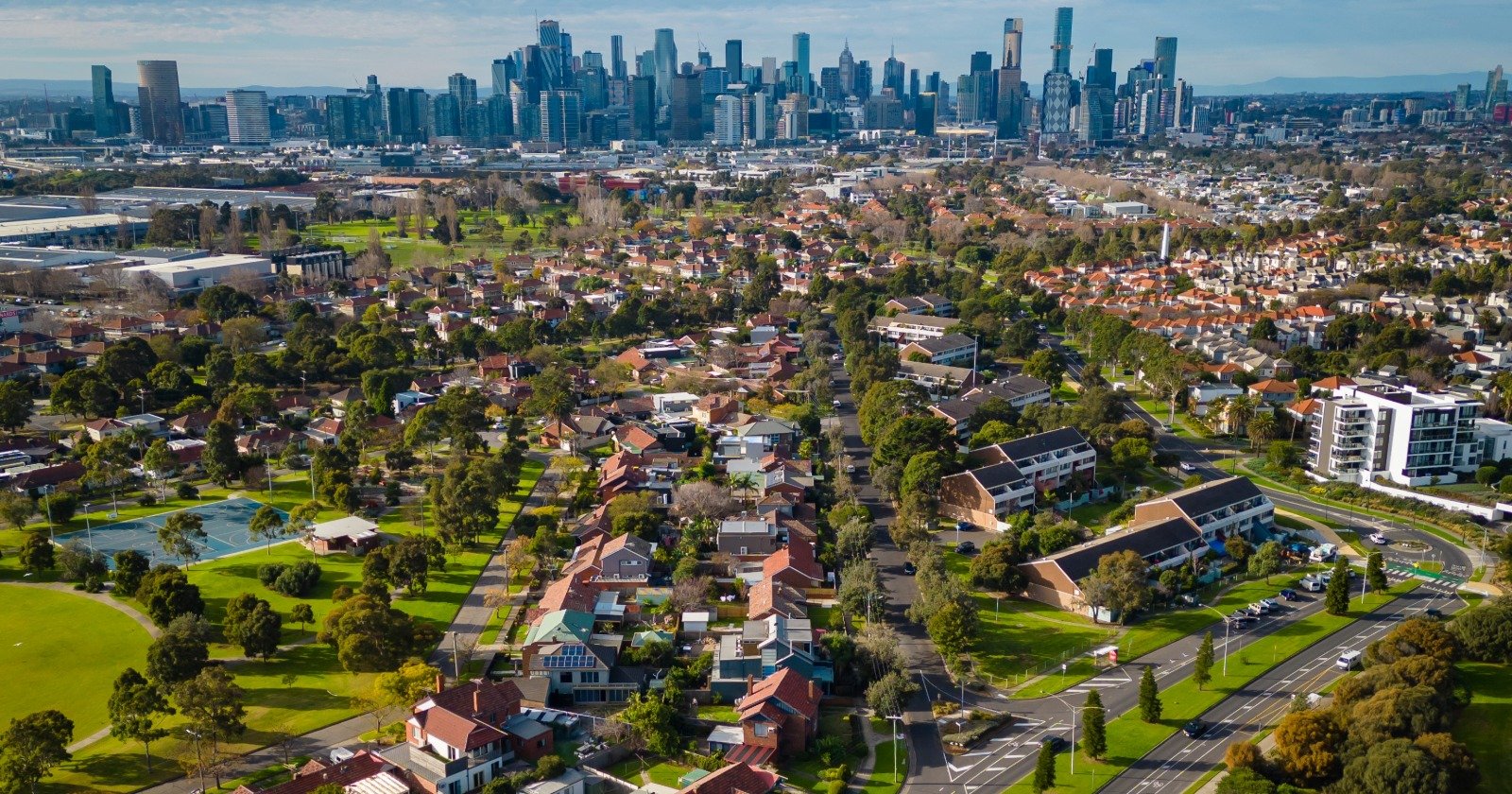
Move to the suburbs and you'll pay less, which is the advice every renter hears, but what it's actually worth to you depends almost entirely on how expensive the core city was in the first place. In the priciest coastal metros, hopping one town over saves a fortune, and leaving New York for Newark across the river cuts about $2,003 off the typical monthly rent.
Trading San Francisco for Oakland saves roughly $1,787 a month and swapping Boston for Worcester keeps about $1,305, but for inland America that same move is much less, since going from Denver to neighboring Aurora saves about $118 a month.
The $2,003 gap
The three biggest savings all sit on the coasts, and each one clears $1,300 a month. New York to Newark leads at about $2,003, which works out to roughly $24,000 a year for the same lease across the Hudson.
San Francisco to Oakland saves about $1,787 and Boston to Worcester about $1,305, so a renter who makes one of those moves and stays put for three years is up something like $72,000 in the first case and around $47,000 in the second.
Renters who make one of these moves keep between $15,000 and $24,000 a year, and it's worth sitting with the reason why, because Newark's typical rent of $2,130 is barely half of New York's $4,133.
Inland American, the discount shrinks
Denver to Aurora saves about $118 a month, Chicago to its own Aurora saves about $122. Those numbers stay small because the core city in these metros was never priced at coastal extremes, so there's very little room for the towns around it to undercut anything.
The suburb is still cheaper, though it's cheaper by an amount that a longer commute and a second car can erase inside a year. The Denver-to-Aurora move nets $1,416 over twelve months.
Every city-and-suburb pair, ranked by monthly savings
Big city | Rent | Nearby cheaper city | Rent | Monthly savings |
|---|---|---|---|---|
New York | $4,133 | Newark | $2,130 | $2,003 |
San Francisco | $4,401 | Oakland | $2,614 | $1,787 |
Boston | $3,469 | Worcester | $2,164 | $1,305 |
$2,224 | $1,749 | $475 | ||
$2,773 | $2,420 | $353 | ||
$3,004 | $2,794 | $210 | ||
$2,409 | $2,287 | $122 | ||
Denver | $1,877 | Aurora | $1,759 | $118 |
Putting a price on the commute
Seattle to Tacoma and Los Angeles to Riverside land in the middle at $475 and $353 a month, which annualizes to $5,700 and $4,236. That's real money by anyone's math, though both suburbs sit far enough out that you'll be adding serious commute time on top.
That's the tension every renter runs into, because the move only pays when the savings clearly outrun the added transport costs and the hours you lose sitting in traffic. On the coasts, where core rent runs past $3,400 or $4,400, the gap is wide enough that an hour behind the wheel still pencils out.
Denver's core rent is $1,877 and Aurora's is $1,759. That same hour of driving buys a renter there about $4 a day.
If you're renting in New York or San Francisco, price the town next door before you sign a renewal, since over three years the difference in those two markets runs from $64,000 to $72,000.
Inland you should run the same check, but expect a much smaller answer.
All rents come from RentDataNow and are anchored to the Zillow Observed Rent Index (ZORI).
Frequently Asked Questions
Which city-to-suburb move saves the most on rent?
New York to Newark, about $2,003 a month based on RentDataNow figures, or close to $24,000 a year.
Do suburbs always cost less than the city?
Usually a little less, but inland the gap can be tiny, such as $118 between Denver and Aurora, so the savings rarely justify a long commute there.
Related Rent Guides
Rent has risen faster than household income since 1990
Median rent has more than tripled since 1990 while household income less than tripled. Here's how the income-to-rent ratio changed…

The cities where high rent pushes renters into poverty
Census counts poverty two ways, and one of them raises the line where rent is high. By that measure, 24% of US renters were poor i…

National Rent Report: U.S. Rents Rose 0.3% in August 2026
The typical US rent rose about 0.3% (roughly $7) from July to August 2026 and is +2.7% year over year. San Francisco led with a +$…

Henry Jo is a housing analyst covering rent data, affordability, city comparisons, and much more. He started following rental data while apartment hunting in two cities at once, and he lives in the Pacific Northwest.
Comments (0)
Sign in to join the discussion
No comments yet. Be the first to share your thoughts.