

Renting a room can save renters 40% to 54%, but insurance still treats it like an edge case
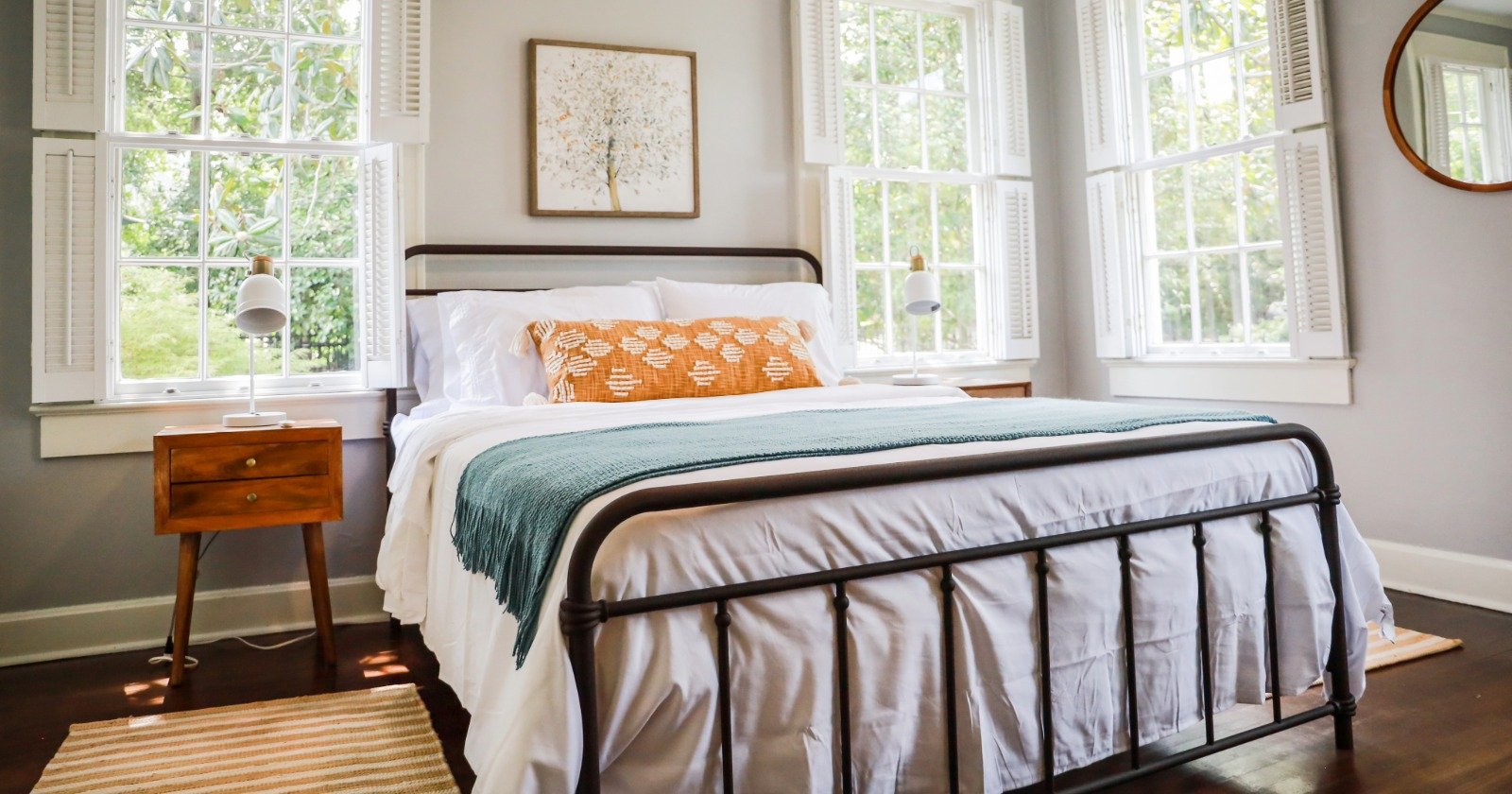
Renting one room in a shared house instead of your own studio is the single biggest discount available in American housing right now. Our data puts the gap of savings between 40% and 54% depending on the city. However, the insurance industry hasn't quite figured out how to cover room rentals.
Why renters keep choosing a room
Take the typical three-bedroom in each city, split it three ways, and compare that to what a studio costs on its own.
City | Studio | Share of a 3-bedroom | You save |
|---|---|---|---|
$1,780 | $823 | 53.8% | |
$1,775 | $839 | 52.7% | |
$2,625 | $1,261 | 52.0% | |
$1,595 | $824 | 48.3% | |
$2,423 | $1,272 | 47.5% | |
$1,264 | $701 | 44.6% | |
$2,035 | $1,224 | 39.9% |
In New York that's the difference between $2,625 and $1,261, which is $16,368 a year. No other housing decision moves that much money for most renters.
The demand pressure behind it is well documented. The Joint Center for Housing Studies counted 22.7 million cost-burdened renter households in 2024, up from 20.4 million in 2019, so a growing share of people are picking a room because a whole apartment stopped being reachable. Mordor Intelligence values the US co-living market at about $1.65 billion in 2025 and projects $3.5 billion by 2031.
The coverage nobody wrote
Standard landlord policies assume one household, one lease, and a clean line of responsibility. Rent-by-the-room breaks all three at once, and the questions it creates don't have obvious answers. If one tenant starts a kitchen fire that damages a housemate's bedroom and the shared living room, whose claim is that? If somebody slips in the hallway and gets hurt, which lease governs?
The National Association of Insurance Commissioners has noted that standard homeowners and dwelling policies weren't built to handle losses involving paying tenants at all, which means an insurer can deny a claim even when no exclusion says so in plain language. Most admitted carriers respond by declining these properties outright rather than pricing them higher.
One program manager, REInsurePro, has launched a rent-by-the-room package covering dwelling, premises liability and tenant liability, with a $60,000 tenant liability limit per location. Zach Baker, a vice president there, said co-living presents heightened risks that most providers won't underwrite.
Read that tenant liability piece carefully if you rent a room, because it's designed to push losses caused by an at-fault tenant back onto that tenant instead of the property owner. That's reasonable from the landlord's side and it means your mistake follows you.
The product also skips California, Colorado and New York entirely, along with Chicago, Houston, Miami and Philadelphia. Those are among the markets where shared housing is most common, so the gap stays wide exactly where the most renters are living this way.
What to do if you rent a room
Get your own renters insurance, and don't assume anything about the landlord's. A landlord policy never covers your belongings, and in a shared house it may not cover much of anything. Coverage runs roughly $15 to $24 a month, which is small against the discount you're already getting.
Two questions worth asking before signing. Ask whether the property is insured specifically for rent-by-the-room occupancy rather than as a standard rental, and ask how the lease assigns responsibility for damage in shared spaces. If your lease makes you liable for the kitchen and four strangers use that kitchen, you've taken on risk that your rent discount didn't price in.
We've written about the economics of this model in Charlotte's co-living market and about what a policy actually pays for in what renters insurance covers.
Sources
Insurance Business America (2026), for the coverage gap, the REInsurePro product terms and state exclusions
Harvard Joint Center for Housing Studies, for cost-burdened renter household counts
RentDataNow rent data by bedroom size, anchored to the Zillow Observed Rent Index, June 2026
Frequently Asked Questions
How much cheaper is renting a room than a studio?
Between 40% and 54% in the cities we track. A one-third share of a typical three-bedroom runs $1,261 in New York against $2,625 for a studio, and $823 in Atlanta against $1,780. That is the largest discount available in most rental markets.
Why won't insurers cover rent-by-the-room properties?
Standard landlord and dwelling policies assume one household under one lease. Multiple unrelated tenants on separate leases sharing a kitchen create liability questions those policies never addressed, so most admitted carriers decline the risk instead of repricing it.
Do I need renters insurance if I rent a room?
Yes, and arguably more than in a conventional apartment. A landlord policy never covers your belongings, and in shared housing the property may carry limited coverage. Policies typically run $15 to $24 a month.
Related Rent Guides

US rent rose 0.4% in September, and the yearly increase is the biggest since 2024
Typical US rent rose about 0.4% in September, to $1,932, and the annual increase reached 2.9%, the fastest since September 2024. R…

Charleston rents are now nearly $500 a month higher than Savannah
Charleston and Savannah get sold as interchangeable coastal Southern cities. On rent they have stopped being comparable, and the g…

National Rent Report: U.S. Rents Rose 0.3% in August 2026
The typical US rent rose about 0.3% (roughly $7) from July to August 2026 and is +2.7% year over year. San Francisco led with a +$…

Jennifer Han is the editor in chief of RentDataNow, covering rent trends, housing costs, and more. She was a real-estate agent before she moved to writing about the market.
Comments (0)
Sign in to join the discussion
No comments yet. Be the first to share your thoughts.