

Austin rental affordability in 2026: rent is 10% below its peak, and no big city is easier on renters' paychecks
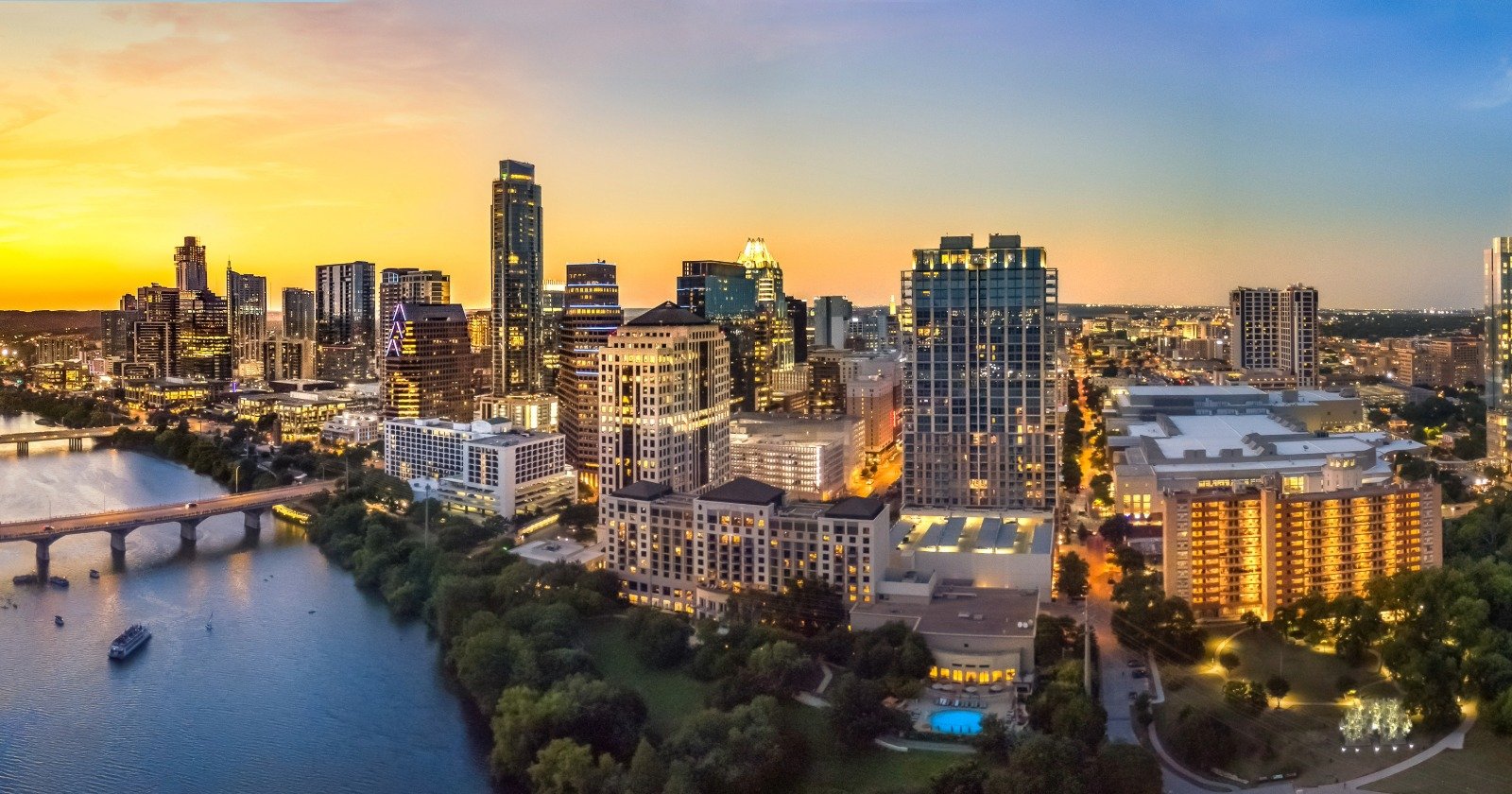
Typical rent in Austin was $1,571 a month in September 2026, up 0.8% from a year earlier and still 10.4% below its July 2022 peak of $1,754, according to RentDataNow data built on the Zillow Observed Rent Index. Keeping that at 30% of gross income takes about $62,840 a year.
For renters, that makes Austin the most affordable of the 50 largest US cities by one key measure. The median Austin renter household earned $69,916 in 2024, according to the US Census Bureau, so a year of typical rent equals about 27% of it. No other big city comes in lower. Since 2021, typical rent is up just 9.6%, from $1,433, while median household income rose about 19% over a similar stretch. Our Rent Reality Score puts Austin rent about 14% below where its own history says it should be.
A typical one-bedroom runs about $1,450 by our estimate, which takes about $58,000 a year at the 30% rule.
Affordable on average still leaves plenty of renters stretched. About 48% of Austin renter households spent 30% or more of their income on housing in 2024, and 57% of the city's households rent.
Across the city, rent ranges widely. Among the 36 Austin zip codes with a full year of data, the cheapest are in the north: 78729, around Anderson Mill, at $1,266, 78753, around North Lamar and Rundberg, at $1,272, and 78728, around Wells Branch, at $1,279, all down more than 1% in a year. Downtown's 78701 is the priciest at $3,177, followed by 78703, around Tarrytown and Clarksville, at $2,392. East Austin's 78702 is $2,103. Rent fell in 10 of the 36 zips.
The suburbs split. Typical rent is up 4.0% in Georgetown, to $1,596, 3.5% in Cedar Park, to $1,702, and 2.4% in Round Rock, to $1,709, while it's down 3.3% in Kyle, to $1,566. Leander is the priciest nearby suburb at $1,897, and San Marcos the cheapest at $1,433. Pflugerville sits at $1,601.
Over the past 11 years, Austin rent has usually been lowest in January and highest in July, a swing of about 2.2%, or roughly $35 a month at today's typical rent. For more on the city's rent cycle, see Austin and the other cities still below their peak rent and Austin rent prices.
Sources
RentDataNow Austin rent data, anchored to the Zillow Observed Rent Index, September 2026, with one-bedroom estimates based on HUD fair market rents and Rent Reality Score trend comparisons
US Census Bureau, American Community Survey 1-year estimates, 2024, for renter income and rent burden, and 5-year estimates, 2017-2021 and 2020-2024, for household income and tenure

Frequently Asked Questions
How much do you need to make to afford rent in Austin?
To keep Austin's typical rent of $1,571 a month at 30% of gross income, you'd need about $62,840 a year. A one-bedroom at about $1,450 takes about $58,000, according to RentDataNow's September 2026 data.
Is Austin rent going down?
It's roughly flat now. Typical Austin rent was $1,571 in September 2026, up 0.8% from a year earlier but still 10.4% below its July 2022 peak of $1,754. Rent fell over the past year in 10 of 36 Austin zip codes.
What is the cheapest area to rent in Austin?
Among Austin zip codes with a full year of data, the cheapest are in the north: 78729 around Anderson Mill at about $1,266 a month, 78753 at $1,272, and 78728 around Wells Branch at $1,279.
Related Rent Guides

Where rent rose the most in 2025, according to new Census data
The median rent US tenants paid rose 4.7% in 2025, to $1,557, new Census data shows. It rose significantly in 43 states and DC and…

Income-restricted apartments: how the rent caps work, and the cities where they save the most
An income-restricted one-bedroom in New York can legally cost up to $1,909 a month, $823 below typical rent. In Phoenix, Austin, a…

Rent-to-income ratio in the 50 biggest US cities: only two come in under 30% for renters
Measured against what renters actually earn, typical rent takes 30% or more of income in 48 of the 50 largest US cities. The media…

Henry Jo is a housing analyst covering rent data, affordability, city comparisons, and much more. He started following rental data while apartment hunting in two cities at once, and he lives in the Pacific Northwest.
Comments (0)
Sign in to join the discussion
No comments yet. Be the first to share your thoughts.