

Cities Where Renting Still Beats Buying in 2026
At a 6.8% mortgage rate with a 20% down payment, buying a median-priced home costs more per month than renting a median apartment in every major US city right now. That's not a close call in most markets. It's not even a debate in some of them. The math has shifted far enough toward renting that the conventional wisdom about buying being the financially responsible choice deserves a harder look than it usually gets.
The comparison below uses RentDataNow's current median two-bedroom rent against a monthly ownership cost that includes mortgage principal and interest, property taxes (estimated at 1.1% annually), homeowner's insurance ($150/month), and maintenance (1% of home value annually). All rent figures from RentDataNow, April 2026. Home price estimates based on current median sale prices by metro.
The Coastal Markets: Not Even Close
The cities where renting's advantage is most extreme are the ones where home prices have outrun rental prices by the widest margin.
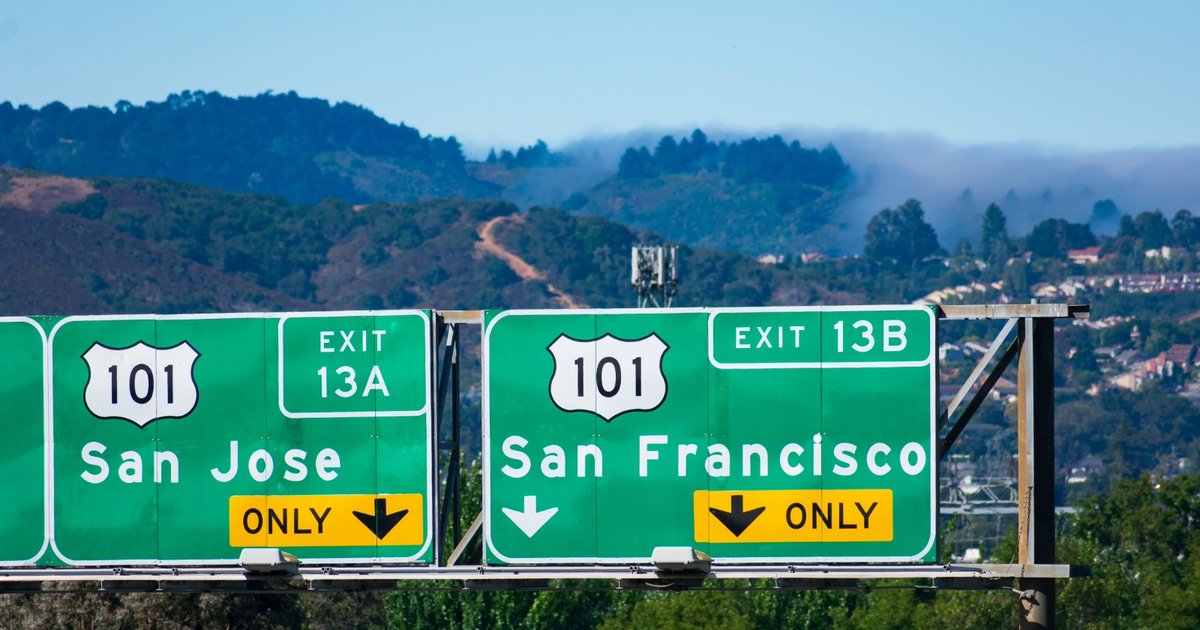
San Jose is the most extreme case. A two-bedroom apartment rents for $3,371 a month. Monthly ownership cost on the $1,350,000 median home: $9,553. The monthly savings from renting: $6,182. Annualized that's $74,188 you're not spending on housing by renting rather than buying in San Jose right now. Even accounting for equity buildup, you'd need substantial appreciation to close that gap.
San Francisco runs $5,467 per month cheaper to rent than own. Seattle is $3,778 cheaper. Los Angeles is $3,500 cheaper. San Diego $2,757 cheaper. These aren't marginal differences. They're the difference between building a retirement account and not building one.
The price-to-rent ratio tells the same story. San Jose at 34.3x means a home costs 34 times the annual rent for a comparable unit. The traditional rule of thumb says buying starts to make financial sense around 15-16x. Anything above 20x generally favors renting. San Jose, San Francisco, and Seattle are at 26x to 34x.
The Sun Belt: Renting Still Wins, by Less
Austin is the most interesting case in the Sun Belt. Monthly ownership cost on a $480,000 median home is $3,493. A two-bedroom rents for $1,447. Monthly savings from renting: $2,046, or $24,557 a year. Austin's price-to-rent ratio is 25.9x, similar to Denver and Portland, which puts it firmly in the renting-favors category despite being a Texas city that most people assume would favor buying.
Denver saves renters $1,912 a month against ownership costs on a $575,000 median home. Miami saves $1,885. Raleigh saves $1,611. Nashville $1,412. Phoenix $1,393.
These markets have a different long-term calculus than the coastal cities. Home price appreciation in Phoenix, Raleigh, and Nashville has been significant over the past decade, which means the equity argument for buying is stronger than in markets where prices are less likely to keep climbing. But on a month-to-month cash flow basis, renters in all of these cities are spending significantly less than buyers right now.
The Midwest: Closest to Breakeven
The cities where the rent vs. buy comparison is closest are in the Midwest, where home prices are lower and the price-to-rent ratios are nearer to historical norms.
Pittsburgh is the closest to breakeven on this list: monthly ownership cost on a $215,000 median home is $1,648, while a two-bedroom rents for $1,477. Monthly savings from renting: $171. That's close enough that the equity and tax arguments for buying start to matter. Pittsburgh's 11.5x price-to-rent ratio is the lowest in the dataset and one of the few cities in the country where the traditional buy-versus-rent math is genuinely contested.
Kansas City saves renters $494 a month against a $250,000 median home. Chicago saves $593. Indianapolis saves $638. Columbus saves $776. These margins are meaningful but not overwhelming. In all four cities, if you're planning to stay for 7 or more years and can make a down payment without depleting your savings, the equity argument starts to compete with the cash flow advantage of renting.
The Interest Rate Factor
The calculations above use 6.8%, roughly where the 30-year fixed has been in early 2026. At 4%, which was the pre-2022 normal, the monthly ownership costs drop significantly and several cities cross from renting-wins to buying-competitive. Pittsburgh, Kansas City, Indianapolis, and Columbus would all favor buying at 4%. Most Sun Belt cities would be close to breakeven.
This is the argument for buying even in today's market: if rates come down meaningfully over the next two to three years, you refinance, your monthly cost drops, and you've been building equity in the meantime. It's a reasonable bet in the Midwest markets where price appreciation has been moderate and the gap is narrow enough that a rate drop closes it.
In San Jose, San Francisco, or Seattle, a rate drop to 4% would still leave renting $3,000 to $5,000 cheaper per month. No refinance closes that gap without a fundamental change in the price-to-rent ratio.
What Renting Actually Wins
The monthly savings calculation above assumes you're comparing a purchased home to a rented apartment at similar quality and size. It doesn't capture everything. Ownership builds equity, provides a hedge against future rent increases, and may offer stability and lifestyle advantages that aren't in the numbers. Renting offers flexibility, no maintenance cost surprises, and the ability to deploy the down payment elsewhere.
In 2026, the cash flow argument for renting is stronger than it has been at any point since before the 2008 financial crisis, primarily because mortgage rates doubled from their pandemic-era lows while home prices didn't fall proportionally. That combination produced price-to-rent ratios in most cities that haven't been seen since the mid-2000s bubble.
The full rent data behind this comparison is on each city page at RentDataNow. Use the affordability calculator to see what current rent costs relative to your income before deciding whether the ownership premium is worth carrying.
Frequently Asked Questions
Is renting currently cheaper than buying in most US cities?
Yes. At current mortgage rates, renting costs less per month than buying in nearly every major metro area.
Why did buying become so much more expensive after 2022?
Mortgage rates rose sharply while home prices remained historically elevated.
Which US cities favor renting the most right now?
San Jose, San Francisco, Seattle, and Los Angeles currently show some of the largest cost advantages for renters.
Related Rent Guides

The cheapest month to sign a lease in 50 big cities, and how much waiting can save
Rent follows a seasonal pattern almost everywhere: lowest in winter, highest in summer. In New York the gap between the cheapest a…
US rent rose 0.4% in September, and the yearly increase is the biggest since 2024
Typical US rent rose about 0.4% in September, to $1,932, and the annual increase reached 2.9%, the fastest since September 2024. R…
More Americans earning $1 million a year are choosing to rent
Households earning at least $1 million a year that rent grew 229% to about 18,400, RentCafe found. In Seattle, San Jose, and Los A…

Jennifer Han is the editor in chief of RentDataNow, covering rent trends, housing costs, and more. She was a real-estate agent before she moved to writing about the market.
Comments (0)
Sign in to join the discussion
No comments yet. Be the first to share your thoughts.