

Rents Are Flat. So Why Does Renting Feel More Expensive Than Ever?
See more of our coverage in your search results.
Add RentDataNow on Google
The headlines say rent growth has stalled. Check your own city on RentDataNow and you might see the same thing, medians that look similar to a year ago, maybe even slightly down. So why does it feel like nothing has gotten better?
Because flat rents are not the same as affordable rents. And the data tells a more complicated story than any single headline.
The Numbers Behind the Headlines
According to Harvard's Joint Center for Housing Studies, asking rents for professionally managed apartments fell about 0.6 percent year over year by the end of 2025. Vacancy rates are up slightly. By the simple math of supply and demand, pressure should be easing.
But the same report found that 22.7 million renter households, nearly half of all renters in the country, spent more than 30 percent of their income on rent and utilities in 2024. That's a record. Another 12.1 million were spending more than half their income on housing alone.
Rents didn't need to keep rising to create a crisis. The crisis was already locked in by the increases that happened between 2020 and 2023. Flat rents on top of a much higher baseline is not relief. It's a new normal that a lot of households can't actually afford.
Who's Getting Squeezed Now
The affordability problem used to be concentrated at the low end. That's changed. Harvard researchers noted that cost burdens are now rising among renters earning between $45,000 and $75,000 a year. These aren't people in poverty. These are people with stable jobs who are simply running out of room in their budgets.
Cost burdens have risen in 44 states and 88 of the 100 largest metro areas over the past five years. That's not a regional story. It's playing out in Austin, Nashville, Charlotte, and Portland just as much as it is in New York and San Francisco. It's a national structural problem.
The Missing Lower-Cost Units
One of the clearest signals in the data: between 2014 and 2024, the number of units renting for less than $1,400 per month fell by 9.3 million. Over the same period, higher-priced units increased by 11.8 million. New construction has consistently targeted the higher end of the market because that's where the margins are. The affordable end of the inventory is shrinking through demolition, conversion, and rent increases that push older units out of reach.
More units are being built. But not the units most renters actually need.
Why Owning Isn't the Escape Hatch Either
The traditional path out of renting, buying a home, has gotten dramatically harder. According to Redfin, a family needs to earn around $110,000 a year to afford a typical home purchase. That's roughly 29 percent above what the median household actually makes. The median age of a first-time homebuyer has climbed to 40, up from 33 just five years ago. More people are renting longer not because they want to, but because the alternative is out of reach.
That demand pressure feeds back into the rental market. More long-term renters competing for the same stock pushes prices up even when new supply is technically increasing.
What This Means If You're Renting Right Now
Flat national averages mask an enormous range at the local level. Some markets have seen genuine softening, places like Austin and Tampa where a wave of new construction temporarily outpaced demand. Other markets like Seattle, Denver, and Atlanta are still seeing steady pressure. The only way to know which situation you're in is to look at your specific city or ZIP code, not the national headline.
That's where local rent data matters. If your market median has come down 5 percent over the past year, you have negotiating leverage at renewal. If it's held flat or risen while vacancy rates in your area are low, you're in a different position entirely. National averages tell you the story of the country. Local data tells you the story of your lease.

Related Rent Guides
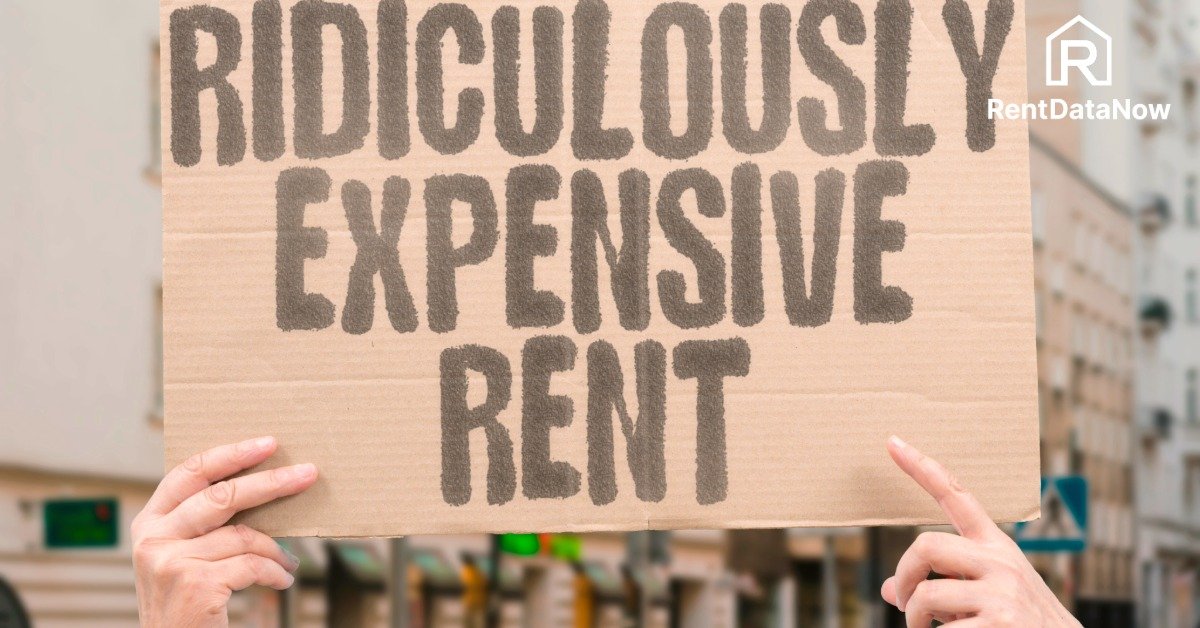
Most Rent-Burdened Cities in the US: 2026 Rankings
The Census Bureau defines a cost-burdened household as one spending more than 30% of gross income on rent. Severely cost-burdened…
The Cities Miami Renters Move to When They Do the Math
Unaffordability is why Miami has become one of the highest-outbound metros in the country for renters who finally do the math and…

House Poor on a Renter's Budget: The Cities Where Rent Eats Everything
The 30% rule is the most repeated piece of financial advice in rental housing: spend no more than 30% of your gross income on rent…
The RentDataNow Editorial Team is a group of housing data analysts and market researchers who track rental price trends, affordability metrics, and housing supply indicators across cities and ZIP codes throughout the United States. Using publicly available datasets from government agencies, housing authorities, and market research sources, we compile and analyze rental price data to provide clear insights into how housing costs are changing over time. RentDataNow aims to make rental market data more transparent and accessible so renters, researchers, and policymakers can better understand local housing trends.
Comments (0)
Sign in to join the discussion
No comments yet. Be the first to share your thoughts.