

Dallas Rent Prices in 2026: What the Data Actually Shows
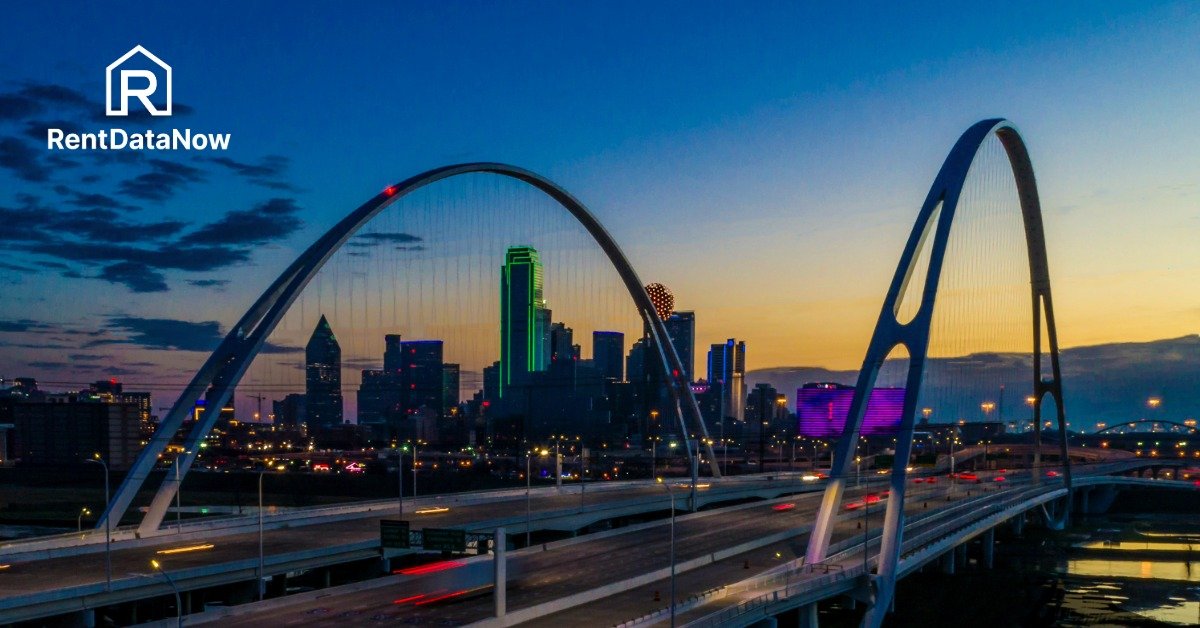
Dallas doesn't get the same rental market attention as Austin or Houston, but it should. It's one of the largest renter-majority cities in Texas, with 57.6 percent of households renting rather than owning, a median rent that sits well below the national average, and a job market that keeps drawing people in from across the country. The city added more residents through domestic migration in 2025 than nearly any other metro in the U.S.
Here's what the rent data actually shows for Dallas in 2026.
The Baseline Numbers
The median rent in Dallas is currently around $1,591 per month across all unit types, according to RentDataNow's March 2026 data. That's about $304 below the national median of $1,895, which puts Dallas in the cheaper-than-68-percent-of-U.S.-cities category. For a market with a population of 1.3 million and a diversified white-collar economy, that's a meaningful value proposition.
Breaking it down by bedroom: studios average around $1,236 to $1,529, one-bedrooms run $1,406 to $1,603, two-bedrooms come in around $1,844 to $1,957, and three-bedrooms average $2,211 to $2,359. Rent has been essentially flat over the past year, up about 0.1 percent annually, which means the sharp increases of 2021 and 2022 have fully unwound in terms of momentum.
At 27 percent of local median household income ($70,518 a year), Dallas rent falls comfortably below the 30 percent cost-burden threshold. That's a better rent-to-income ratio than most major Texas cities and significantly better than coastal alternatives.
The Neighborhood Divide Is Wide
Like most large Texas metros, the difference between the cheapest and most expensive Dallas neighborhoods is enormous. Knowing which end of the spectrum you're looking at matters a lot when you're budgeting.
On the affordable end, neighborhoods like Vickery Meadows and Casa View have one-bedrooms around $950 to $960. Northeast Dallas, Highland Hills, and Oak Cliff all come in under $1,100 for a one-bedroom. These areas offer genuine value but are more car-dependent than central neighborhoods and have varying levels of walkability and amenities.
In the middle tier, Bishop Arts District runs $1,300 to $1,500, Oak Lawn is $1,500 to $1,700, and Deep Ellum and Old East Dallas land around $1,270 to $1,400. These neighborhoods have the most character and walkability in Dallas at a price point that's still well below the city's most expensive areas.
At the premium end, Uptown is the priciest neighborhood in Dallas at an average of $2,785 for all unit types, up 6.5 percent year over year. One-bedrooms there average around $2,327 and two-bedrooms hit $3,546. Preston Hollow and Turtle Creek are similarly priced. Downtown Dallas is slightly more accessible at around $2,042 on average, and rents there actually dipped about 1.3 percent over the past year as new supply came online.
Why Dallas Is Still a Good Deal Compared to Other Texas Cities
Texas has no state income tax, which helps every renter's purchasing power. But within Texas, Dallas currently offers meaningfully better value than Austin, where median rents have come down significantly but still run higher than Dallas. Houston is roughly comparable to Dallas on rent but has a different neighborhood structure. San Antonio is cheaper than Dallas but also has lower median incomes.
Dallas's cost of living index sits around 102 to 103, meaning it's just 2 to 3 percent above the national average. For comparison, Austin's index is closer to 120. That gap matters for renters who are choosing between Texas cities for a relocation.
The DFW Suburbs: More Space for Less
Dallas proper is ringed by a dense network of suburbs that offer meaningfully lower rents in exchange for more car dependence and longer commutes. Garland, Irving, Carrollton, and Richardson all offer one-bedrooms in the $1,000 to $1,300 range. Plano and Frisco run higher, reflecting their newer development and strong school systems, but still offer significant space advantages over intown Dallas at comparable price points.
Fort Worth to the west is worth serious consideration for renters working anywhere along the I-30 corridor. It has its own distinct identity, a growing job market anchored by aerospace and healthcare, and rents generally below Dallas levels.
Arlington and McKinney round out the suburban options for renters who want more square footage. Both are significantly cheaper than intown Dallas neighborhoods with access to major employer corridors throughout the metro.
What's Driving the Market in 2026
Dallas-Fort Worth added more people through domestic migration in 2024 and 2025 than almost any other metro in the country. Companies like Toyota, JPMorgan Chase, Goldman Sachs, and State Farm have all expanded their DFW footprints in recent years, which keeps a steady flow of professional renters moving into the market.
Construction has been active but not at the level of Austin or Phoenix, which means Dallas avoided the most severe supply glut and subsequent rent collapse. Rents have been flat to slightly positive year over year, which is a more stable outcome than the dramatic swings seen in other Sun Belt cities. The market is described as warm with rising monthly momentum, suggesting conditions are gradually tightening rather than continuing to soften.
The Bottom Line
Dallas offers a rare combination for a major U.S. city: a genuinely large and diverse metro, a strong job market across multiple industries, rents well below the national median, and a rent-to-income ratio that leaves households with meaningful financial margin. It doesn't have Austin's tech scene reputation or Houston's sheer size, but for renters prioritizing affordability relative to income without sacrificing city scale, it consistently holds up as one of the better deals among major American metros.
Check current rent data by bedroom and ZIP code for Dallas at RentDataNow.
Frequently Asked Questions
What is the average rent in Dallas in 2026?
The average rent in Dallas is around $1,591 per month across all unit types, which is significantly below the national median of $1,895.
Are Dallas suburbs cheaper than living in the city?
Yes, suburbs like Garland, Irving, and Richardson offer lower rents and more space, though they typically require longer commutes and more car dependence.
Which neighborhoods in Dallas are the cheapest to rent in?
More affordable neighborhoods include Vickery Meadows, Casa View, Oak Cliff, and Highland Hills, where one-bedroom apartments can often be found for under $1,100 per month.
Related Rent Guides
How to Break a Lease Without Losing Your Deposit
Breaking a lease does not have to cost you your security deposit. Here is how to read your options, use your legal protections, an…

Why Every Rent Report Gives a Different Number, and Which One to Trust
One city, five rent reports, five different numbers. Here is what each major source actually measures, why they disagree, and whic…

Average Rent by State: From $1,206 in Iowa to $3,612 in New York
Rent varies nearly threefold across the US. Here is the average rent in all 50 states, from the cheapest to the most expensive, wi…

Jennifer Han is the editor in chief of RentDataNow, covering rent trends, housing costs, and more. She was a real-estate agent before she moved to writing about the market.
Comments (0)
Sign in to join the discussion
No comments yet. Be the first to share your thoughts.