

Does rent control actually work?
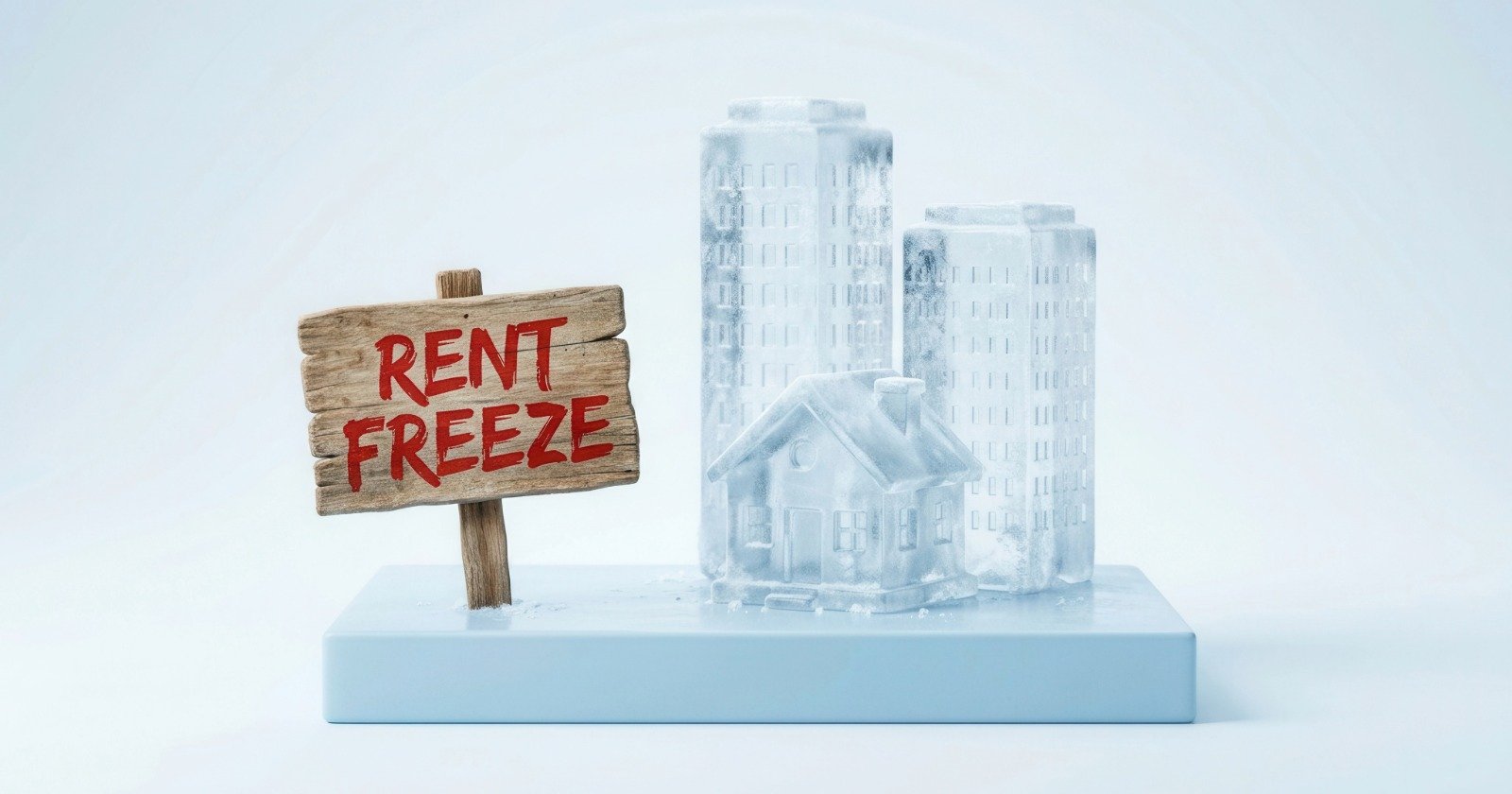
Rent control or rent freeze arguments usually run on theory. In the past five years three American cities adopted caps while a comparable neighbor didn't, so let's see how both housing policies changed the rent.
We measured all six markets from June 2021 to June 2026. The caps slowed rent, by less than supporters promise and more than opponents concede, and one of the three didn't work at all.
Three experiments, five years
City | Policy | 2021 | 2026 | Change |
|---|---|---|---|---|
Rent control | $1,822 | $2,429 | +33.3% | |
None | $1,782 | $2,533 | +42.1% | |
Rent control | $1,282 | $1,480 | +15.4% | |
None | $1,434 | $1,686 | +17.6% | |
Rent control | $2,127 | $2,785 | +30.9% | |
None | $2,118 | $2,674 | +26.3% |
Portland, Maine is the strongest result, since its voters passed rent control in 2020 and it took effect in 2021, and over the five years since, rent rose 8.8 percentage points less than in South Portland across the river. The two cities started $40 apart and now sit $104 apart.
St. Paul is similar but closer, where its 2021 ballot measure, later softened, produced a 2.2-point gap against Minneapolis in the same metro.
Santa Ana breaks the pattern entirely. Its ordinance took effect in 2022 and rent there rose 4.6 points faster than in neighboring Anaheim, so if the policy did anything to market rent in Orange County, our data can't see it.
What these numbers do and don't measure
The critical thing to understand is what a citywide median captures, because it blends controlled and uncontrolled units and reprices whenever a tenant moves out. So these figures measure the policy's effect on the market that a new renter faces, not the benefit to a tenant already sitting in a covered apartment.
That second number is much larger, and it isn't really disputed by anyone. A tenant who stayed in one Portland, Maine apartment through those five years saw increases capped near inflation every year, currently 2.6% for 2027, while the market around them rose 33.3%. For the people inside a controlled unit, the policy works exactly as advertised.
Why the effect stays small
Coverage explains most of it, since these ordinances typically exempt new construction, allow a reset at turnover, and carve out small landlords, which leaves a large share of any city's rentals outside the cap. New York's two-year freeze applies only to stabilized units, which is why citywide rent there still rose 16.0% over the past year.
Then there's the supply question, and the most cited study on it, by Stanford economist Rebecca Diamond and colleagues, found San Francisco's rent control expansion cut rental supply about 15% as owners converted or redeveloped, pushing citywide rents up roughly 5% long term. Our three experiments are too short and too small to test that, and none of them shows the perverse result the study warns about, but five years isn't long enough to rule it out either.
Austin has no rent control and its rent is 9.5% below its 2022 peak, because the city built enough new apartments to outrun demand. No capped city in our data came close to that.
So the answer to whether rent freezes work is that it depends what you're asking. For sitting tenants, clearly yes. For the market price a new renter pays, the effect is real but small.
We laid out the wider policy picture, including algorithm bans and tenant protections, in whether rent freezes, caps and algorithm bans lower rent, and looked at one city's ban in detail in San Francisco two years after its algorithm ban.
Sources
RentDataNow city rent data, June 2021 through June 2026, anchored to the Zillow Observed Rent Index
Rebecca Diamond, Tim McQuade and Franklin Qian, The Effects of Rent Control Expansion on Tenants, Landlords, and Inequality: Evidence from San Francisco, American Economic Review, 2019
Frequently Asked Questions
Do rent freezes actually lower rent?
They slow it modestly at the market level. Over five years, rent-controlled Portland, Maine rose 8.8 percentage points less than neighboring South Portland and St. Paul 2.2 points less than Minneapolis, while Santa Ana rose 4.6 points faster than Anaheim. For tenants inside a covered unit the benefit is much larger.
Why does citywide rent rise even under rent control?
Because coverage is partial. Ordinances usually exempt new construction, reset rent at turnover, and carve out small landlords. New York's two-year freeze applies only to stabilized units, which is why citywide rent there still rose 16.0% in a year.
What lowers rent more than rent control?
Building. Austin has no rent control and its rent sits 9.5% below its 2022 peak after a large apartment construction boom, a bigger decline than any capped city in our data achieved.
Related Rent Guides

US rent rose 0.4% in September, and the yearly increase is the biggest since 2024
Typical US rent rose about 0.4% in September, to $1,932, and the annual increase reached 2.9%, the fastest since September 2024. R…
When a rent-controlled tenant dies in San Francisco, the widow can face a market-rate rent
A San Francisco widow paying $2,450 a month could see her rent reset to market after her husband, the leaseholder, died. Californi…

Charleston rents are now nearly $500 a month higher than Savannah
Charleston and Savannah get sold as interchangeable coastal Southern cities. On rent they have stopped being comparable, and the g…

Jennifer Han is the editor in chief of RentDataNow, covering rent trends, housing costs, and more. She was a real-estate agent before she moved to writing about the market.
Comments (0)
Sign in to join the discussion
No comments yet. Be the first to share your thoughts.