

San Francisco Rent Is Up 50% From Its Pandemic Floor, Three Years After the Doom Loop Talk
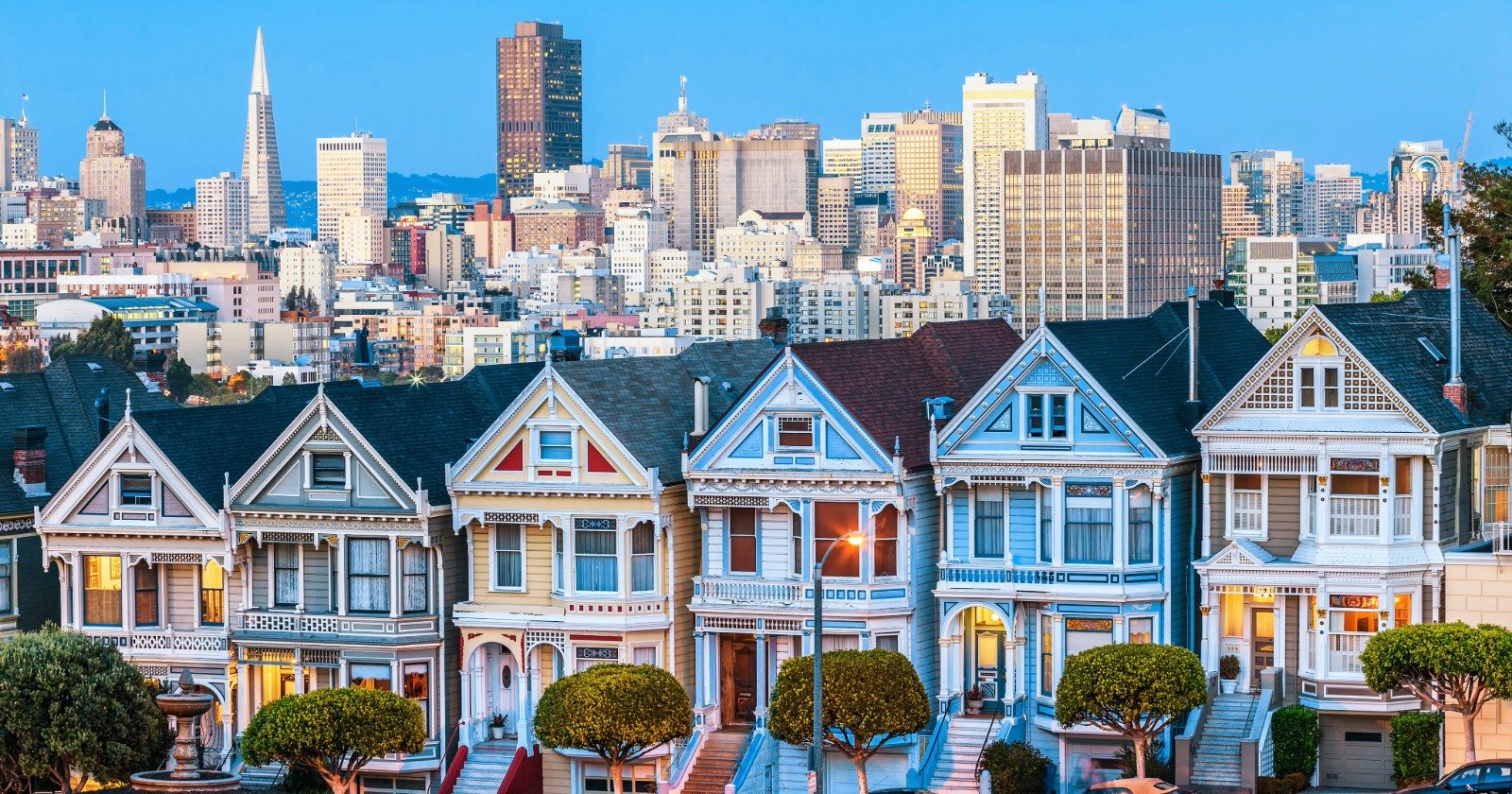
San Francisco rent is up 50.2% from where it bottomed out in February 2021, and it now sits 25.1% higher than it was in January 2020. Less than three years ago the city was the subject of a steady run of doom loop coverage, including a 2023 New York Times piece asking how San Francisco ended up in one, and with hindsight, that framing has aged badly since the city keeps breaking its own rent records.
What the latest figures show
The median one-bedroom in San Francisco reached $4,180 in July, up 22.9% year over year, according to Zumper, while the median two-bedroom climbed 25.9% to $6,020. That's the first time two-bedrooms in the city have crossed $6,000 on Zumper's platform, and it means a two-bedroom in San Francisco now costs more than one in New York.
Our own figures track the same direction on a different measure, with RentDataNow putting the typical San Francisco rent across all unit sizes at about $4,401 a month in June, up 26.0% over the year. Zumper reports asking rents on new listings by bedroom count while ours is a citywide index across all leases, so the two won't match exactly, which we get into in why rent estimates differ.
The recovery went well past recovery
San Francisco rent returned to pre-pandemic levels back in April and coverage at the time treated that as the finish line, but the city blew through it within a few months.
Rent bottomed at about $2,931 in February 2021, when offices sat empty and people left, and it's $4,401 now, so the climb off that floor works out to 50.2% while the city runs 25.1% above where it stood in January 2020 at $3,519. Anyone who signed a lease during the quiet stretch and stayed put has watched the market move roughly $1,470 a month past them.
Testing the supply explanation
Zumper's team points at supply. "Our data shows pretty clearly that this is a supply story," said Crystal Chen, a housing market expert at the company, and CEO Shawn Mullahy made the same argument in the firm's national report, saying rents firm up where new supply gets absorbed while renters keep leverage where inventory is still building.
Active listings in the city are down roughly 30% year over year, partly because tenants who might otherwise move are staying put rather than risking a worse deal, so units that would normally cycle back onto the market simply don't.
Our trend model backs the scarcity read and then goes further, because we fit each city's rent against its own ten-year trajectory and San Francisco's current rent runs about 31.6% above what that trajectory projects, roughly $4,401 against an expected $3,344. That's the widest gap of any city in our dataset.
One caveat matters here, and we'd rather state it than bury it, since our model flags San Francisco as low confidence when a series crashes hard and then rockets back, which makes the trend line shaky and the fit unreliable. The direction is clear even so, because this market has moved well beyond a return to normal.
The rest of the expensive tier isn't doing this
San Francisco's run looks stranger next to its peers, since New York rent is up 15.7% over the year to about $4,133, which is fast by any normal standard and still well behind San Francisco. Boston, which the coverage lists as the third most expensive city for renters, is essentially flat at about $3,469, down 0.5% on the year.
So this isn't expensive coastal cities rising together, it's one metro pulling away from the group, which is what an employment shock looks like when it lands on a housing stock that can't grow. We mapped the wider split in the great rent divergence, where Sun Belt metros that built through the boom are giving rent back while supply-starved coastal markets keep climbing.
What would have to change
Chen expects demand to hold. "On the demand side, barring a major shift like a significant move back to remote work again, demand appears like it's here to stay," she said.
The construction pipeline is the number to watch, since a city that adds units gets its leverage back while a city that doesn't stays where San Francisco is now. We covered the earlier stages of this run in our pieces on rent topping $4,000 and the AI hiring boom, and it's worth checking the current figure on our San Francisco page before you take any listing at face value.
Sources
SFGATE, "A few years ago people were saying San Francisco is doomed. Rents say otherwise"
Zumper National Rent Report, one-bedroom and two-bedroom medians and annual growth
RentDataNow San Francisco, New York, and Boston rent data (Zillow Observed Rent Index, June 2026) and RentDataNow trend model
Frequently Asked Questions
How much has San Francisco rent risen since the pandemic?
RentDataNow tracks a typical San Francisco rent of about $4,401 a month in June, up 50.2% from the February 2021 low of roughly $2,931 and 25.1% above the January 2020 level of about $3,519.
Why are San Francisco rents rising so fast?
Zumper attributes it mainly to supply, with active listings down roughly 30% year over year and a thin construction pipeline, while AI hiring keeps demand strong. Renters staying put rather than moving also keeps units from cycling back onto the market.
Is San Francisco more expensive than New York?
For two-bedrooms, yes. Zumper reports a median two-bedroom of $6,020 in San Francisco, above New York, though New York still has the priciest one-bedrooms at a median of $4,560.
Related Rent Guides
California rent would take 17 years to catch up to a mortgage payment. At this year's pace, Los Angeles would take 54
Rent in six big California metros would need about 17 years of normal growth to match what a homebuyer pays now. At last year's sl…
San Francisco rent hits record $4,682 a month, requiring a $187,280 salary
Typical rent in San Francisco hit $4,682 in August, up 25.1% in a year. At the 30% rule that takes $187,280 a year, which is more…
Rent has risen faster than household income since 1990
Median rent has more than tripled since 1990 while household income less than tripled. Here's how the income-to-rent ratio changed…

Henry Jo is a housing analyst covering rent data, affordability, city comparisons, and much more. He started following rental data while apartment hunting in two cities at once, and he lives in the Pacific Northwest.
Comments (0)
Sign in to join the discussion
No comments yet. Be the first to share your thoughts.