

National Rent Report: U.S. Rents Rose 0.4% Across the Nation in June 2026, Led by Coastal Cities

The typical US rent rose about 0.4% from May to June 2026, or roughly $8 on a typical $1,951-a-month rent, a modest and seasonal uptick that put the year-over-year increase at 3.6%, about $68 more a month than a year earlier. It was a broad move: of the 330 cities with at least 100,000 residents that RentDataNow tracks, 203 saw rent rise month over month while 120 fell.
This is our monthly read on where rent is heading, based on the latest Zillow Observed Rent Index (ZORI) release. The short version for June: rents ticked up about in line with the season, and the increases were concentrated in the tight, expensive coastal markets rather than spread evenly across the country.
The national picture in June 2026
The typical rent nationwide sits around $1,951 a month. The 0.4% monthly rise, roughly $8, is right in step with the usual spring and summer pattern, when demand peaks and landlords hold firmer on price. About two-thirds of large cities rose, which points to a steady market rather than a sharp move in either direction. The 3.6% year-over-year gain, about $68 a month, is well below the double-digit surges of 2021 and 2022 and closer to a normal pace of rent growth.
Where rents rose fastest
The biggest increases came from supply-starved coastal metros, led by San Francisco, where rent jumped 3.5% in a single month, a $148 rise from $4,253 in May to $4,401 in June.
City | May rent | June rent | Change ($) | Change (%) |
|---|---|---|---|---|
San Francisco, CA | $4,253 | $4,401 | +$148 | +3.5% |
New York, NY | $4,049 | $4,133 | +$84 | +2.1% |
San Jose, CA | $3,413 | $3,479 | +$66 | +1.9% |
Irvine, CA | $3,326 | $3,390 | +$64 | +1.9% |
Stockton, CA | $1,953 | $1,989 | +$36 | +1.8% |
Winston-Salem, NC | $1,509 | $1,537 | +$28 | +1.9% |
Four of the six fastest risers are in California, and New York rounds out the expensive end. These are the markets where new construction has not kept up with demand, so seasonal pressure pushes rent up quickly and in real dollars, San Francisco alone added $148 in a month.
Where rents fell
At the other end, the steepest declines were spread across the Sun Belt and Midwest, led by Bakersfield, California, down 4.7%, a $92 drop from $1,957 to $1,865.
City | May rent | June rent | Change ($) | Change (%) |
|---|---|---|---|---|
Bakersfield, CA | $1,957 | $1,865 | -$92 | -4.7% |
Chula Vista, CA | $3,059 | $3,008 | -$51 | -1.7% |
Laredo, TX | $1,369 | $1,331 | -$38 | -2.8% |
Toledo, OH | $1,156 | $1,125 | -$31 | -2.7% |
Dallas, TX | $1,648 | $1,618 | -$30 | -1.8% |
New Orleans, LA | $1,689 | $1,664 | -$25 | -1.5% |
The bigger pattern
June extends a split we have tracked all year. The coastal metros that never built enough housing keep climbing, while several Sun Belt and interior cities, where apartment construction has been heavy, continue to give some rent back. We explain that divide in detail in the great rent divergence. The seasonal timing matters too: as we found in our look at the best time of year to rent, late spring and summer are when rents rise fastest, so June's uptick is expected rather than a sign of a new surge.
Rent figures come from RentDataNow, anchored to the Zillow Observed Rent Index (ZORI) for June 2026; month-over-month change compares June to May, and year-over-year compares June to the same month in 2025.
Frequently Asked Questions
How much did US rent change in June 2026?
The typical US rent rose about 0.4%, or roughly $8, from May to June 2026, reaching about $1,951 a month, and is up 3.6% (about $68 a month) compared with a year earlier. Roughly two-thirds of large cities saw rent rise.
Which cities had the biggest rent increases in June 2026?
In dollar terms, San Francisco led with a $148 monthly increase (to $4,401), followed by New York (+$84, to $4,133) and San Jose (+$66, to $3,479). All are tight coastal markets where housing supply is limited.
Related Rent Guides
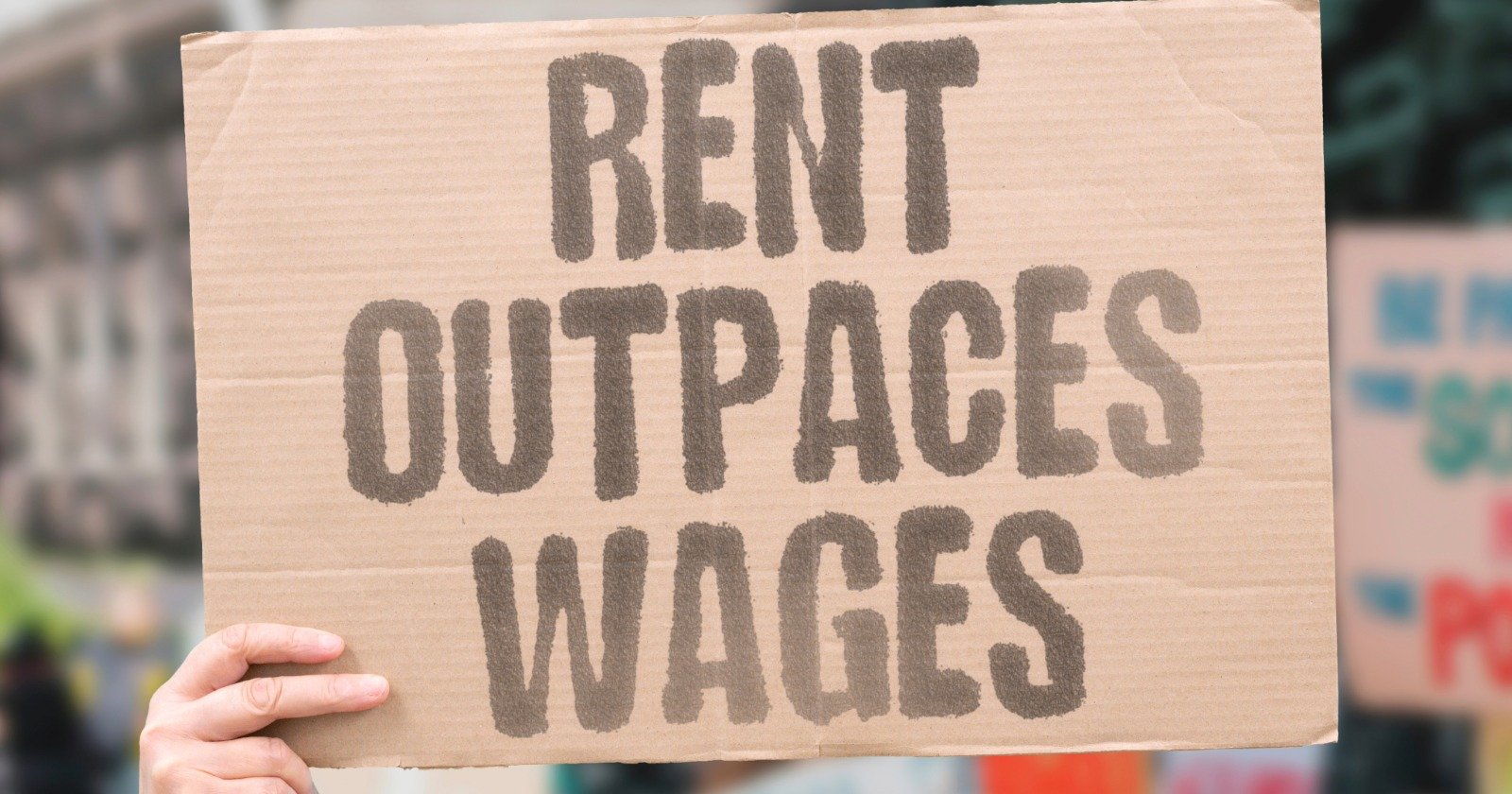
Rent has risen faster than household income since 1990
Median rent has more than tripled since 1990 while household income less than tripled. Here's how the income-to-rent ratio changed…

The cities where high rent pushes renters into poverty
Census counts poverty two ways, and one of them raises the line where rent is high. By that measure, 24% of US renters were poor i…

National Rent Report: U.S. Rents Rose 0.3% in August 2026
The typical US rent rose about 0.3% (roughly $7) from July to August 2026 and is +2.7% year over year. San Francisco led with a +$…

Henry Jo is a housing analyst covering rent data, affordability, city comparisons, and much more. He started following rental data while apartment hunting in two cities at once, and he lives in the Pacific Northwest.
Comments (0)
Sign in to join the discussion
No comments yet. Be the first to share your thoughts.