

San Francisco Rent Prices by Neighborhood in 2026
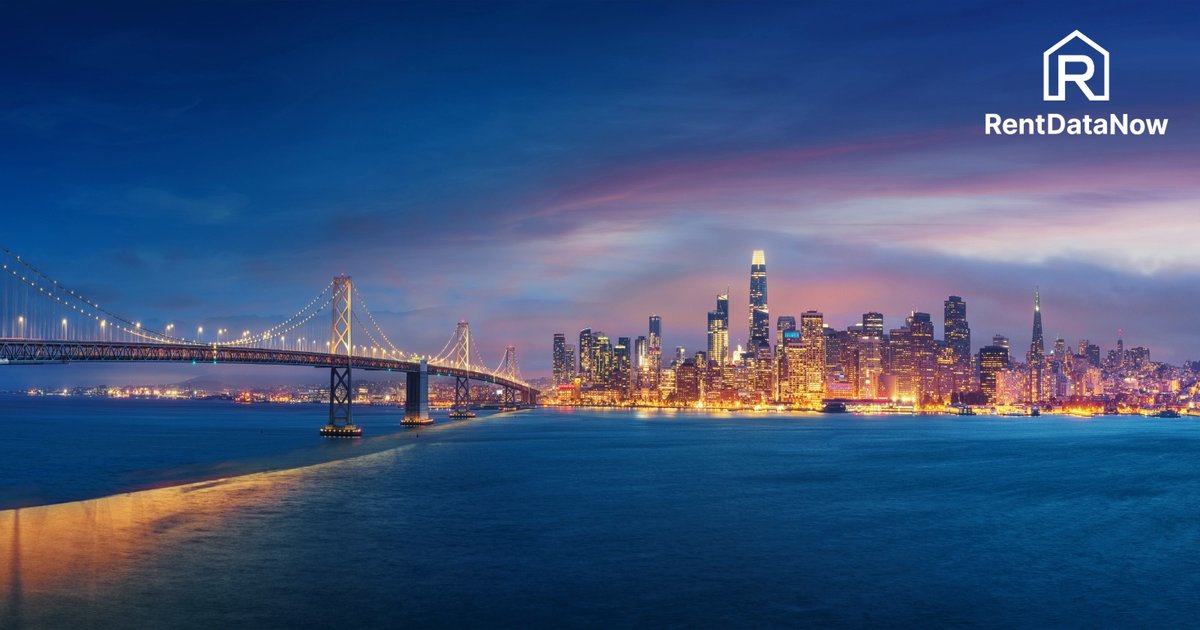
San Francisco's citywide median rent is $3,958 a month, up 17.03% year over year. That's the sharpest annual increase of any major city in the country right now, and it's running on top of a five-year climb from $2,928 in 2021. The pandemic-era exodus narrative is over. The tech sector returned to office, supply stayed constrained, and rents snapped back faster than almost anyone predicted.
Within the city the spread is wide. West Portal is falling. Rincon Hill is up 24%. A renter who picks the right neighborhood in 2026 is in a meaningfully different financial situation than one who picks the wrong one. Here's what the data shows.
All figures from RentDataNow ZIP and neighborhood data, April 2026.
The Only Neighborhood Where Rents Are Falling
West Portal and Forest Hill (94116) are down 6.3% year over year, median rent $3,094, one-bedrooms at $3,270, two-bedrooms at $3,960. It's the most affordable ZIP in the dataset and the only one moving in the right direction for renters. West Portal is a quiet, residential neighborhood on the western edge of the city, walkable along its commercial strip, with direct Muni Metro access downtown. The decline likely reflects a combination of new supply and some softening of demand in a neighborhood that skews toward families and older residents rather than the tech workers driving demand in SoMa and the Mission.
If you're looking for any negotiating leverage in San Francisco right now, this is where it exists.
The Affordable (Relatively) End
Civic Center and the Tenderloin (94102) sit at $3,200 median, one-bedrooms at $2,510, up 14.4% year over year. The Tenderloin's long-running reputation for street-level problems has kept rents lower than surrounding neighborhoods, and that gap is narrowing as the broader city surges. For renters who can tolerate the neighborhood's character and want the lowest one-bedroom average inside the city limits, it remains the clearest value.
Excelsior and Outer Mission (94112) are at $3,260, one-bedrooms at $2,510, up a modest 3.2%. The Excelsior is one of SF's most genuinely diverse neighborhoods, historically working-class, with good transit access and a commercial corridor on Mission Street. The 3.2% growth is the second-slowest in the dataset after the flat ZIPs, and the absolute price is among the lowest. For renters who want to actually live in San Francisco on something approaching a normal salary, the Excelsior is one of the only neighborhoods where that's still discussable.
Russian Hill and Nob Hill (94109) run $3,153 median, one-bedrooms at $2,550, up 17.6%. The one-bedroom average is the lowest of any neighborhood with genuine walkability and central access. Russian Hill specifically has a high density of older rent-controlled buildings that keep the median down relative to the neighborhood's desirability.
The Richmond: Two Neighborhoods, Similar Story
Outer Richmond sits at $3,565 median, up 16.92% year over year. Inner Richmond is $3,833, up 15.24%. Both ZIPs show one-bedrooms at $2,510 to $2,730 and two-bedrooms at $2,990 to $3,300, which are among the lower bedroom averages in the city despite the high medians. The Richmond neighborhoods have historically been popular with Asian-American families and older residents, less driven by tech worker demand than the eastern neighborhoods, and the one-bedroom averages reflect a housing stock with more rent-controlled older units.
The 15 to 17% year-over-year growth is still steep. But the starting point and the bedroom economics are better than most of the city.
The Mission and SoMa: Central, Expensive, Rising Fast
The Mission District (94110) runs $3,919 median, up 11.8%, one-bedrooms at $2,540. The Mission has been SF's most culturally vibrant neighborhood for decades, and demand has stayed high through every cycle. The 11.8% growth is above the national average but below the city's overall 17%, meaning it's actually appreciating slightly slower than SF as a whole right now.
SoMa (94103) is at $3,972, up 15.9%, one-bedrooms at $2,910, two-bedrooms at $3,520. SoMa's proximity to the tech corridor and its concentration of newer apartment buildings makes it a direct beneficiary of the office return. The one-bedroom at $2,910 is among the higher averages in the city, reflecting a stock dominated by newer luxury buildings rather than older rent-controlled inventory.
The Premium Neighborhoods: Castro, North Beach, Rincon Hill
Castro and Noe Valley (94114) are at $4,491 median, up 20.3% year over year, one-bedrooms at $3,190. North Beach and Telegraph Hill (94133) sit at $4,547, up 22.0%. The Marina is at $4,084, up 16.12% year over year, one-bedrooms at $3,780 and two-bedrooms at $4,580, the highest two-bedroom average in the city.
Rincon Hill and the Embarcadero (94105) top the list at $5,011 median, up 24.2% year over year, the steepest appreciation of any ZIP in the dataset. One-bedrooms at $3,910, two-bedrooms at $4,730. Rincon Hill is the newest high-rise corridor in SF, luxury tower inventory built for tech executives and finance workers, and it's the part of the market most directly tied to the office return driving the citywide surge.
What 17% Growth Means in Practice
A renter paying $3,200 a year ago in Civic Center is paying $3,712 today if they renewed at market. That's $512 more a month, $6,144 more a year, on the same apartment. San Francisco's median household income of $140,970 and 34% rent-to-income ratio mean the city is technically above the affordability threshold even at the highest income level of any city in this dataset. The 17% growth is pushing that ratio higher with every month.
For renters who can work remotely and are currently paying San Francisco prices, the comparison cities are worth running. Austin at $1,542 median and a 20% income ratio. Denver at $1,826 and 23%. The RentDataNow compare tool lets you put San Francisco against any city side by side on rent and income.
Frequently Asked Questions
Why are San Francisco rents rising so quickly again?
The return of tech office demand and limited housing supply have pushed rents sharply higher.
Which San Francisco neighborhoods are still relatively affordable?
Areas like West Portal, Excelsior, and parts of the Tenderloin remain among the lower-priced options.
Are any San Francisco neighborhoods seeing rent declines?
Yes. West Portal and Forest Hill are currently one of the few areas with falling rents.
Related Rent Guides
California rent would take 17 years to catch up to a mortgage payment. At this year's pace, Los Angeles would take 54
Rent in six big California metros would need about 17 years of normal growth to match what a homebuyer pays now. At last year's sl…
San Francisco rent hits record $4,682 a month, requiring a $187,280 salary
Typical rent in San Francisco hit $4,682 in August, up 25.1% in a year. At the 30% rule that takes $187,280 a year, which is more…
Rent has risen faster than household income since 1990
Median rent has more than tripled since 1990 while household income less than tripled. Here's how the income-to-rent ratio changed…

Henry Jo is a housing analyst covering rent data, affordability, city comparisons, and much more. He started following rental data while apartment hunting in two cities at once, and he lives in the Pacific Northwest.
Comments (0)
Sign in to join the discussion
No comments yet. Be the first to share your thoughts.